




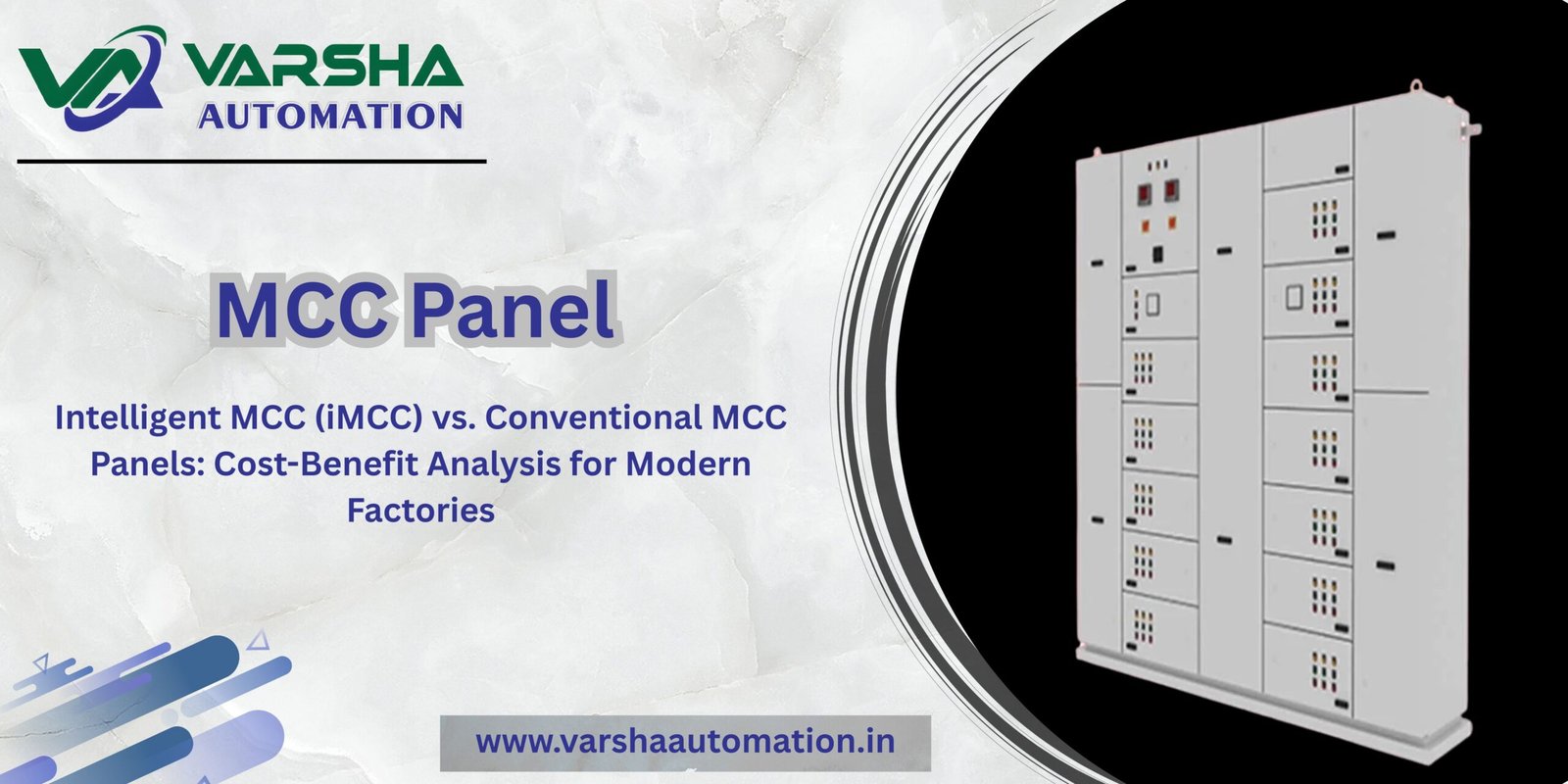
Intelligent MCC (iMCC) vs. Conventional MCC Panels: Cost-Benefit Analysis for Modern Factories
For decades, the standard Motor Control Center (MCC) has been the workhorse of industrial motor management. It successfully houses starters, switches, and fuses to protect pumps, compressors, and conveyors. However, in today’s data-driven manufacturing landscape—where unplanned downtime can cost thousands of dollars per hour—traditional motor protection is no longer sufficient.
Enter the Intelligent Motor Control Center (iMCC).
By replacing basic thermal overload relays with smart, microprocessor-based communication modules, iMCCs turn standard motor starters into active data nodes. Below, we provide an objective engineering comparison and cost-benefit analysis to help you choose the right system for your facility.
1. Technological Architecture: Analog vs. Smart Networks
Understanding the internal differences between these two systems highlights why the industry is shifting toward smart motor management.
Conventional MCC Panels
Traditional MCCs rely on hardwired, discrete components:
Protection: Simple thermal-magnetic bi-metallic overload relays.
Monitoring: If a motor trips, physical indicators (lamps) or auxiliary contacts on the contactor trigger a general alarm.
Wiring Complexity: Hundreds of physical control wires run from the panel’s terminal blocks to the central control desk, increasing the likelihood of loose connections and installation errors over time.
Intelligent MCC (iMCC) Panels
iMCCs introduce digital bus communication directly inside the starter drawer:
Protection: Smart, electronic microprocessor-based Motor Protection Relays (MPRs).
Monitoring: Continuous measurement of voltage, current, power factor, thermal capacity, earth leakage, and operating hours.
Simplified Wiring: Instead of a complex web of control wires, a single industrial communication cable (such as Modbus, Profibus, or Ethernet/IP) daisy-chains all starter buckets back to a centralized PLC master.
Engineering Context: From our manufacturing unit in Ahmedabad, we build custom panels tailored to both robust traditional configurations and advanced smart integrations. To learn more about our general industrial capabilities, visit our Varsha Automation Home page
2. Head-to-Head Technical Comparison
| Feature | Conventional MCC Panel | Intelligent MCC (iMCC) Panel |
| Wiring & Installation | High density, hardwired controls. Labor-intensive install. | Single bus cable loop. Fast installation and testing. |
| Predictive Maintenance | Reactive. Hard to predict when a winding or bearing is degrading. | Proactive. Signals alerts for running-overcurrent or imbalance before a trip. |
| Fault Diagnostics | Limited to general “Trip/No Trip” indication. Manual troubleshooting required. | Pinpoint diagnostics (e.g., “Phase Unbalance on Bucket #4, Starter 2”). |
| PLC System Integration | Requires massive PLC I/O card count for physical terminations. | Integrates hundreds of parameters through virtual I/O over bus communication. |
| Physical Footprint | Larger, due to high component counts and wire alleys. | Compact design, often reducing overall switchgear footprint by 15-20%. |
3. Cost-Benefit Analysis: Is the Premium Worth It?
There is no denying that an iMCC panel carries a higher initial hardware cost than a conventional panel. The smart motor relays, network gateways, and specialized bus cables increase upfront procurement expenses.
However, looking at the Total Cost of Ownership (TCO) reveals a different story:
A. Drastic Reduction in Mean Time to Repair (MTTR)
In a conventional panel, when a motor stops, an electrician must open the panel, check drawings, and manually measure voltages to find the fault. In an iMCC, the central SCADA dashboard instantly flags the precise cause (e.g., Earth Leakage or Phase Loss), reducing troubleshooting time from hours to seconds.
B. Energy Management & Optimization
Conventional systems do not track power usage per motor. iMCC modules actively monitor $kW$ and $kWh$, allowing energy managers to track down inefficient equipment, optimize duty cycles, and lower peak demand charges.
C. Predictive Failure Prevention
Conventional relays only trip when damage is already occurring. iMCC relays continuously track the thermal capacity of the motor windings. If a pump starts pulling slightly more current over a week due to a clogged impeller, the iMCC alerts maintenance before the motor burns out.
4. Seamless Upstream Automation Integration
Because an iMCC continuously broadcasts high-density parameter data, it acts as the perfect foundation for complete plant automation.
Connecting your motor controls to high-level monitoring networks requires robust control logic. You can read about coordinating smart panel systems in our guide on custom PLC Scada Panels configurations. For applications where motor speeds need active, dynamic variation alongside smart protective parameters, traditional fixed-speed starters are often replaced or augmented with high-efficiency VFD Panels.
Future-Proof Your Plant with Varsha Automation
Choosing the right Motor Control Center architecture depends heavily on your process criticalities. For simple, non-continuous applications, a conventional layout may suffice. But for high-capacity, round-the-clock process plants, the preventive power of an iMCC pays for itself within months.
Are you designing a new production facility or upgrading your existing plant’s motor controls? Explore our rugged, high-performance MCC Panels or contact our technical engineering team in Ahmedabad today to receive a custom system drawing.
Need heavy-duty power distribution to feed your control centers? Check out our robust, type-tested PCC Panels.