




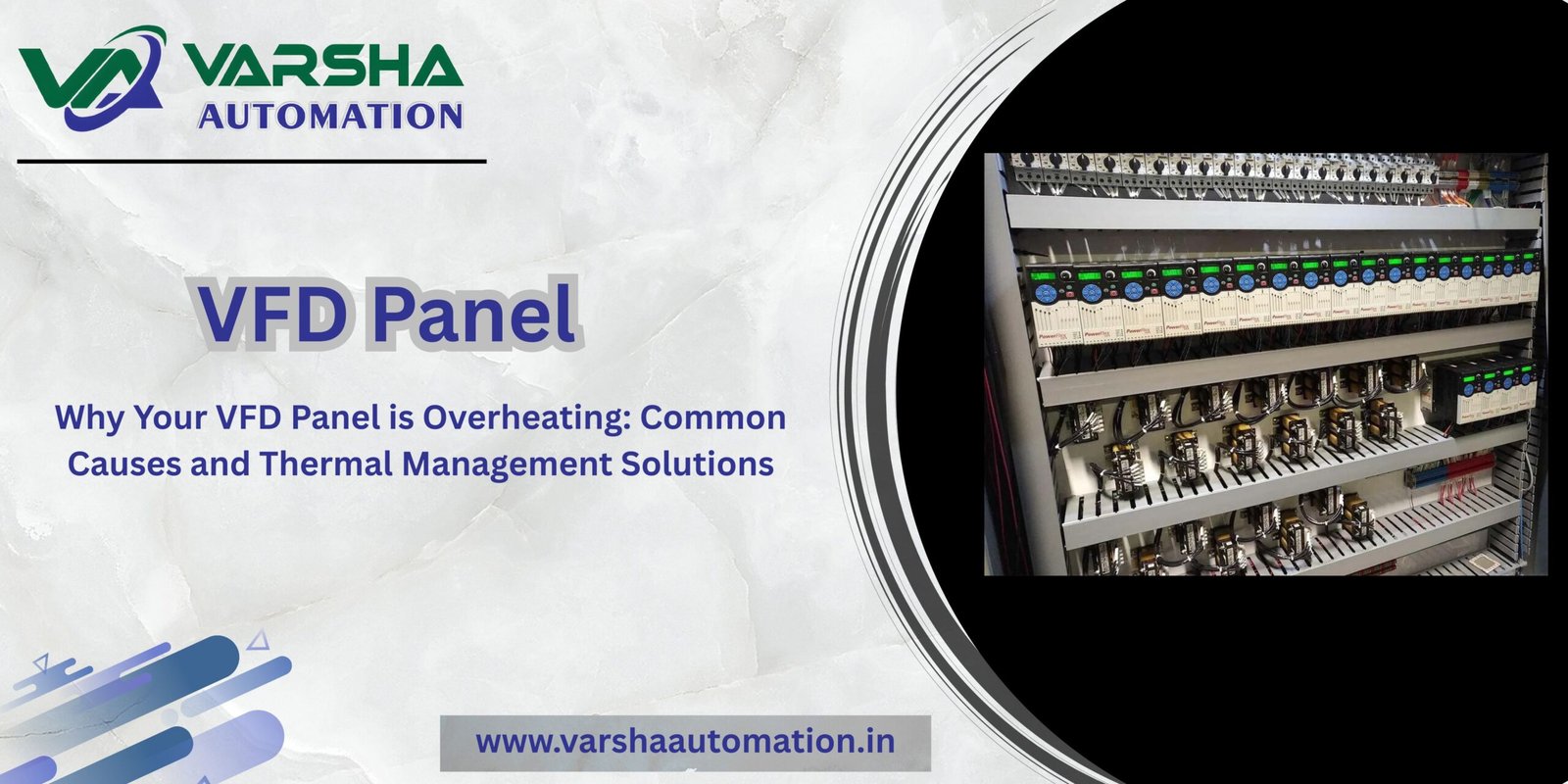
Why Your VFD Panel is Overheating: Common Causes and Thermal Management Solutions
Variable Frequency Drives (VFDs) are the workhorses of modern industrial plants. By adjusting motor speeds to match actual demand, they save massive amounts of energy and protect heavy mechanical equipment from high start-up wear.
However, VFDs have a distinct vulnerability: Heat.
Unlike traditional fixed-speed motor starters, a VFD relies on fast-switching power semiconductors that generate significant localized heat during operation. If that heat is trapped inside an enclosed control panel, the temperature spikes rapidly. When a drive hits its thermal limit, it triggers an over-temperature trip, instantly halting production.
This technical guide covers the primary causes of VFD panel overheating and provides practical thermal management steps to keep your automation systems running smoothly.
1. The Main Culprits Behind VFD Overheating
Before installing bigger fans or drilling open your panel doors, it is vital to pinpoint exactly why the internal ambient temperature is crossing safe thresholds (typically 40 to 50 degrees Celsius).
Clogged Air Filters: Industrial environments are filled with dust, oily mist, and fibers. Intake filters catch these particles, but they eventually choke off the airflow. Without fresh air circulation, the internal cabinet acts like an oven.
Poor Component Spacing: VFDs need breathing room. A common design error is crowding multiple drives closely side-by-side or stacking them vertically. Heat rises directly off the bottom drive into the intake of the top unit, causing immediate thermal failure.
Undersized Enclosures: A small enclosure has less surface area to naturally radiate heat outward. If the enclosure volume is calculated based only on component dimensions rather than heat dissipation requirements, the panel will overheat even on cool days.
2. Practical Mechanical Layout Strategies
Proper cabinet layout is the most effective and affordable way to control heat. Good airflow management solves thermal issues before they start.
Follow Clear Clearance Rules: Always preserve the manufacturer-specified clear space around each drive. Generally, leave a minimum clearance above and below the drive unit to allow hot air to exit the heat sink freely.
Separate High-Heat Elements: Keep components that are sensitive to heat—such as programmable logic controllers (PLCs) and sensitive low-voltage power supplies—positioned below the VFDs or in a separate bay entirely.
3. Selecting the Right Enclosure Cooling System
When natural convection through the enclosure walls isn’t enough, active thermal management is required. The choice of cooling depends heavily on your factory floor environment.
Forced Ventilation (Filter Fans + Louvers): This setup uses active intake fans at the bottom of the panel and exhaust vents at the very top. This is an excellent, budget-friendly choice for clean, climate-controlled control rooms.
Closed-Loop Panel Air Conditioners: If your panel sits in a harsh environment with airborne dust, corrosive chemicals, or extreme ambient temperatures, you cannot draw outside air into the cabinet. A dedicated panel air conditioner keeps the internal air completely sealed, cycling it through a cooling compressor while discharging heat outside.
4. Connecting Thermal Safety with Broader Plant Systems
Managing VFD panel performance is part of maintaining a reliable plant floor. The heat profiles of these drives must be monitored continuously by your facility control networks.
If your plant uses precision automation architectures, these VFD temperature warnings and operational parameters stream directly back to a central room. You can discover how these visualization networks are built in our comprehensive technical guide to PLC Scada Panels.
Furthermore, because these drive enclosures rely on a steady, uncompromised supply of primary low-voltage power, they are always positioned downstream from robust facility breakers. To explore our high-capacity switchgear structural options, view our deep dive into PCC Panels.
Maintain Peak Uptime with Custom VFD Panels
Allowing your electrical drives to run hot drastically shortens the lifespan of their internal components, leading to unexpected and expensive equipment failures. Investing in professional thermal design preserves your automation equipment for years to come.
Are you dealing with frequent drive trips or planning to deploy high-horsepower motor controllers in a demanding factory setting? Explore our type-tested, ventilated VFD Panels or contact our engineering desk in Ahmedabad today for a custom evaluation.
Looking for smart motor control centers that blend precision thermal protection with integrated overload breakers? Check out our custom solutions for heavy-duty MCC Panels.