




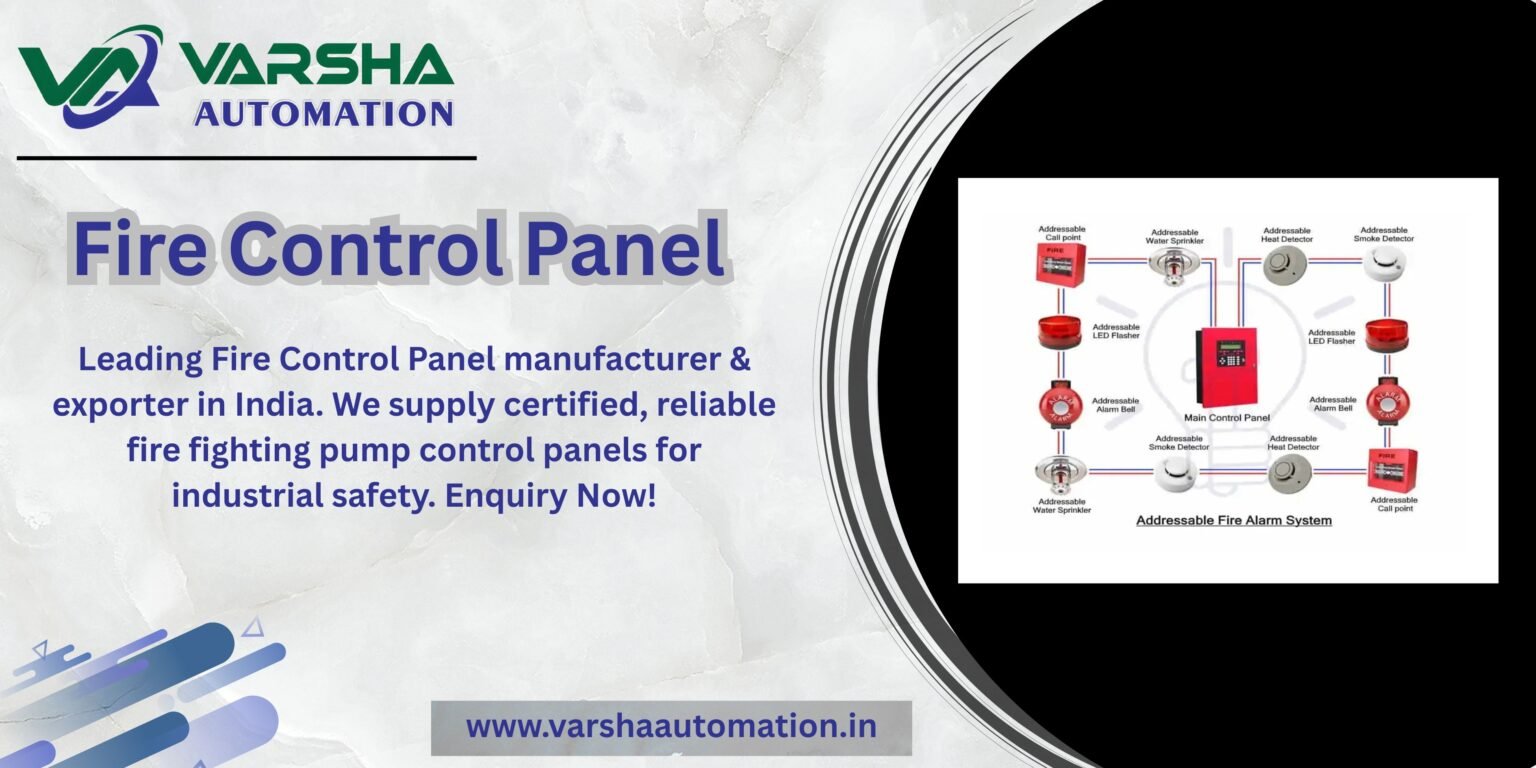
Fire Control Panel Manufacturer In Ahmedabad , Gujarat , India
Fire safety is one of the most critical aspects of any residential, commercial, industrial, or public infrastructure project. A fire incident can result in severe damage to property, disruption of operations, financial losses, and most importantly, risks to human life. To minimize these risks and ensure rapid response during emergencies, modern buildings rely on advanced fire detection and alarm systems. At the heart of these systems is the Fire Control Panel.
A Fire Control Panel (FCP) serves as the central monitoring and control unit of a fire alarm system. It continuously receives signals from smoke detectors, heat detectors, manual call points, flame detectors, and other fire detection devices. When a fire or emergency condition is detected, the panel activates alarms, warning systems, emergency controls, and notification devices to alert occupants and emergency responders.
Fire Control Panels are widely used in commercial buildings, hospitals, shopping malls, hotels, factories, warehouses, educational institutions, airports, railway stations, pharmaceutical plants, power stations, and industrial facilities where safety and regulatory compliance are essential.
As fire safety standards become increasingly stringent, Fire Control Panels play a crucial role in protecting people, property, and critical operations.
What is a Fire Control Panel?
A Fire Control Panel is an electronic control unit designed to monitor fire detection devices and initiate appropriate alarm and safety responses when fire-related conditions are detected.
The panel acts as the brain of the entire fire alarm system and manages communication between detectors, alarms, emergency systems, and monitoring stations.
Its primary responsibilities include:
- Fire detection monitoring
- Alarm activation
- Emergency notification
- System supervision
- Fault monitoring
- Event recording
- Emergency equipment control
By continuously monitoring fire detection devices, the panel ensures rapid response during fire emergencies.
Importance of Fire Control Panels
Modern buildings contain numerous fire hazards, making early detection and quick response essential.
Early Fire Detection
Detects smoke, heat, and fire conditions at an early stage.
Protection of Human Life
Provides immediate alerts to building occupants.
Property Protection
Helps reduce fire damage through faster response.
Regulatory Compliance
Supports compliance with fire safety regulations and building codes.
Continuous Monitoring
Operates around the clock to ensure constant protection.
Emergency Coordination
Integrates with fire suppression and evacuation systems.
Working Principle of a Fire Control Panel
A Fire Control Panel operates continuously to monitor connected fire detection devices.
Device Monitoring
The panel monitors various field devices such as:
- Smoke Detectors
- Heat Detectors
- Flame Detectors
- Manual Call Points
- Gas Detectors
Signal Processing
When a detector senses abnormal conditions, it sends a signal to the panel.
Alarm Verification
The control panel evaluates the incoming signal and confirms alarm conditions.
Alarm Activation
If a fire condition is confirmed, the panel activates:
- Audible alarms
- Visual alarms
- Emergency warning systems
Emergency System Control
The panel may also activate:
- Fire pumps
- Sprinkler systems
- Smoke extraction systems
- Emergency lighting
- HVAC shutdown systems
Notification
Alerts can be transmitted to monitoring stations and emergency personnel.
Event Recording
All events are logged for future analysis and reporting.
Major Components of a Fire Control Panel
Control Processor
The central processing unit that manages all system functions.
Functions:
- Signal processing
- Alarm management
- Device communication
- System supervision
Display Screen
Provides real-time information regarding system status.
Displays:
- Alarm conditions
- Fault conditions
- Device status
- Event logs
Power Supply Unit
Provides operating power to the fire alarm system.
Features:
- Stable power supply
- Battery backup support
Battery Backup System
Ensures operation during power outages.
Benefits:
- Continuous protection
- Emergency reliability
Notification Circuits
Control alarm sounders and warning devices.
Devices Activated:
- Sirens
- Horns
- Strobe lights
Communication Modules
Enable integration with external monitoring systems.
Supported Systems:
- Building Management Systems (BMS)
- SCADA Systems
- Remote Monitoring Centers
Input Circuits
Receive signals from detectors and field devices.
Output Control Modules
Control external emergency equipment and systems.
Types of Fire Control Panels
Conventional Fire Control Panel
Divides a building into detection zones.
Features:
- Simple design
- Cost-effective installation
- Suitable for small buildings
Applications:
- Small offices
- Retail stores
- Residential complexes
Addressable Fire Control Panel
Each detector has a unique address for precise identification.
Benefits:
- Exact fire location identification
- Faster response
- Advanced monitoring
Applications:
- Hospitals
- Hotels
- Large commercial building
Intelligent Fire Control Panel
Uses advanced processing and diagnostics.
Features:
- Reduced false alarms
- Enhanced monitoring
- Network connectivity
Applications:
- Data centers
- Industrial facilities
- Smart buildings
Networked Fire Control Panel
Multiple panels communicate across large facilities.
Advantages:
- Centralized monitoring
- Scalability
- Improved management
Fire Detection Devices Connected to Fire Control Panels
Smoke Detectors
Detect smoke particles in the air.
Types:
- Photoelectric Detectors
- Ionization Detectors
Heat Detectors
Detect abnormal temperature increases.
Suitable For:
- Industrial environments
- Kitchens
- Mechanical rooms
Flame Detectors
Detect infrared or ultraviolet radiation from flames.
Applications:
- Fuel storage areas
- Chemical plants
Manual Call Points
Allow occupants to manually activate alarms.
Importance:
- Immediate emergency notification
Gas Detectors
Monitor combustible or toxic gases.
Applications:
- Chemical industries
- Laboratories
Applications of Fire Control Panels
Fire Control Panels are essential across numerous industries and facilities.
Commercial Buildings
Provide complete fire protection for offices and retail spaces.
Benefits:
- Occupant safety
- Regulatory compliance
Hospitals
Protect critical healthcare environments.
Benefits:
- Patient safety
- Continuous monitoring
Hotels
Support guest safety and emergency evacuation.
Benefits:
- Rapid response
- Reduced risk
Manufacturing Plants
Monitor industrial fire hazards.
Benefits:
- Equipment protection
- Worker safety
Warehouses
Protect valuable inventory and storage facilities.
Benefits:
- Early detection
- Reduced losses
Educational Institutions
Ensure safety for students and staff.
Benefits:
- Emergency preparedness
- Fast evacuation
Data Centers
Protect critical IT infrastructure.
Benefits:
- Equipment protection
- Business continuity
Advantages of Fire Control Panels
Early Warning System
Provides rapid fire detection and response.
Continuous Monitoring
Operates 24 hours a day.
Improved Emergency Response
Reduces reaction time during emergencies.
Reduced Property Damage
Supports early intervention.
Enhanced Occupant Safety
Facilitates evacuation and emergency management.
Regulatory Compliance
Meets fire safety requirements and standards.
System Integration
Works with suppression and building management systems.
Event Logging
Provides valuable incident records.
Modern Features of Fire Control Panels
Modern fire alarm systems include advanced technologies.
Touchscreen Displays
Provide intuitive system operation.
Remote Monitoring
Allows supervision from remote locations.
Network Connectivity
Supports integration across multiple buildings.
Mobile Notifications
Sends alerts directly to responsible personnel.
Cloud-Based Monitoring
Provides real-time access to system information.
Building Management System Integration
Improves facility-wide safety management.
Intelligent Diagnostics
Identifies faults and maintenance needs.
Data Logging and Reporting
Maintains detailed operational records.
Factors to Consider When Selecting a Fire Control Panel
Building Size
Determine the number of zones or devices required.
Type of Occupancy
Consider specific fire risks and safety requirements.
Detection Requirements
Select compatible fire detection technologies.
Expansion Capability
Allow for future building growth.
Communication Features
Evaluate remote monitoring needs.
Regulatory Compliance
Ensure compliance with local fire safety standards.
Reliability Requirements
Choose systems designed for continuous operation.
Maintenance of Fire Control Panels
Routine maintenance is essential for reliable fire protection.
Test Alarm Devices
Verify proper operation of horns and strobes.
Inspect Detectors
Ensure sensors remain clean and functional.
Check Battery Backup
Confirm emergency power availability.
Review Event Logs
Monitor system performance and faults.
Verify Communication Systems
Ensure reliable connectivity.
Perform Regular System Testing
Maintain compliance and readiness.
Future of Fire Control Panel Technology
Fire protection systems continue to evolve with new technologies.
Emerging developments include:
- AI-Based Fire Detection
- Smart Building Integration
- IoT Connectivity
- Cloud Monitoring Platforms
- Predictive Maintenance
- Advanced Analytics
- Mobile Emergency Notifications
- Intelligent Evacuation Systems
These innovations are helping organizations improve safety, reduce risks, and enhance emergency response capabilities.
Conclusion
A Fire Control Panel is the central component of any fire detection and alarm system, providing continuous monitoring, rapid emergency response, and critical life safety protection. By integrating detectors, alarms, emergency equipment, and monitoring systems, Fire Control Panels help safeguard people, property, and business operations from fire-related hazards.
Whether installed in commercial buildings, hospitals, manufacturing plants, hotels, warehouses, or public infrastructure, Fire Control Panels remain an essential investment in safety and regulatory compliance. As technology advances, modern fire control systems will continue to play a vital role in creating safer and smarter buildings worldwide.