




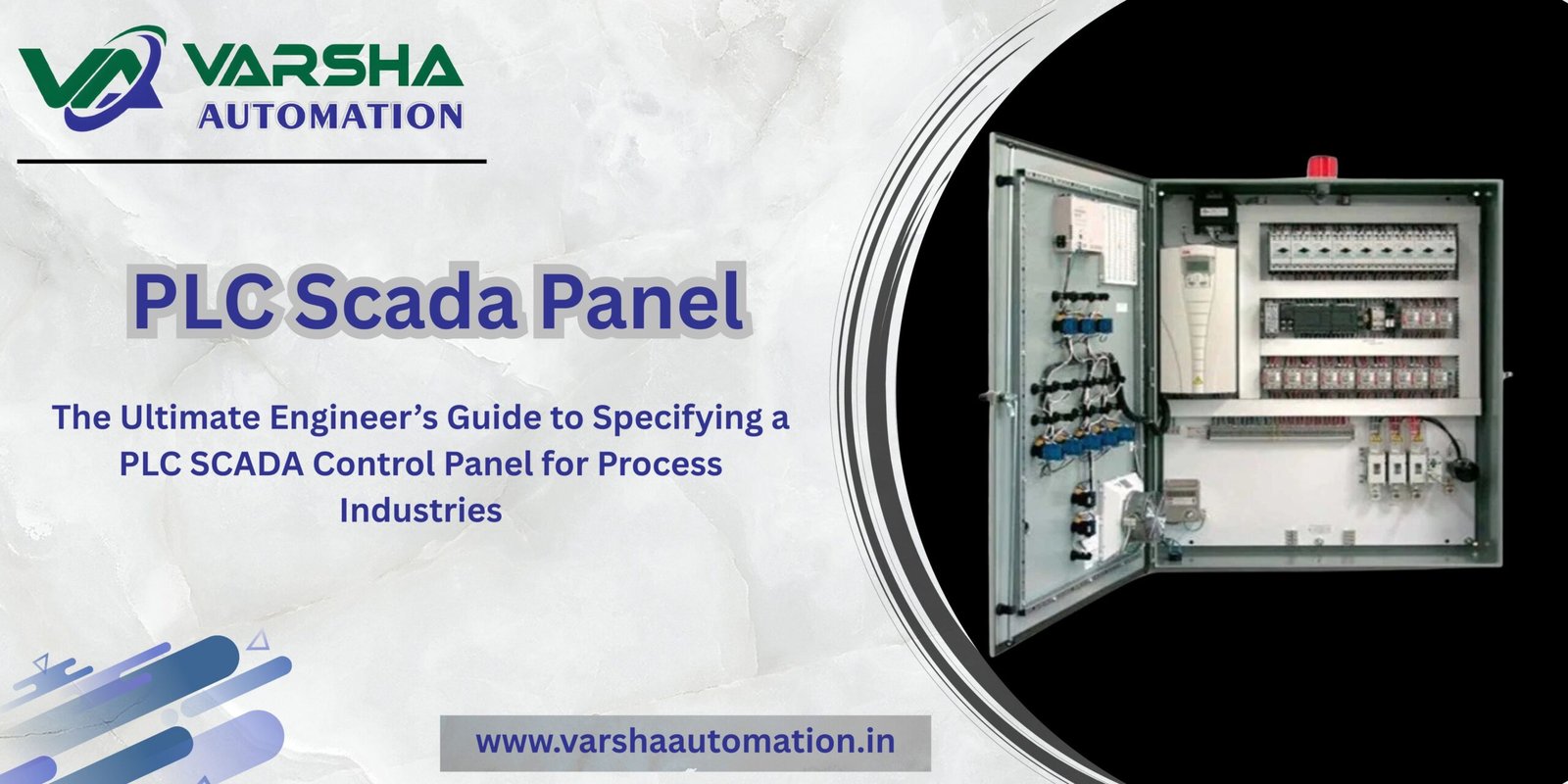
The Ultimate Engineer’s Guide to Specifying a PLC SCADA Control Panel for Process Industries
In modern manufacturing, industrial automation functions as the operational brain of the factory floor. While power switchgear handles raw electrical energy, the PLC SCADA Control Panel coordinates complex system loops—managing input and output signals from thousands of field sensors, instrumentation arrays, control valves, and heavy machinery.
When engineering a programmable logic controller (PLC) and supervisory control and data acquisition (SCADA) system architecture, precision during the specifications stage is non-negotiable. Poorly designed control panels invite electrical electromagnetic interference (EMI), suffer communication dropouts, and limit future system expansions.
This guide outlines the critical engineering parameters required to specify a high-reliability industrial automation panel.
1. Calculating Input/Output (I/O) Loops and Planning Spare Capacity
The starting point of any automation panel layout is mapping the field signals that the central PLC processor must track and control.
Discrete I/O: These are binary digital signals (On/Off, Open/Closed). Inputs typically include limit switches, proximity sensors, push buttons, and motor trip statuses. Outputs feed contactor coils, pilot lights, and solenoid valves.
Analog I/O: These are continuous process signals representing variable values like temperature, pressure, flow rate, and weight. Common analog architectures use 4-20mA current loops or 0-10V signals.
The 20% Expansion Rule: Never specify a PLC panel with zero room to grow. Always engineer a minimum of 20% spare unassigned physical I/O terminals and empty DIN-rail slots. This allows your team to integrate new field devices later without replacing the entire expensive chassis or rewiring the core cabinet.
2. Managing Signal Segregation and Minimizing Electrical Noise (EMI)
One of the most frequent causes of erratic PLC behavior or corrupted analog readings is electromagnetic noise. This occurs when high-voltage power runs run too close to highly sensitive low-voltage control circuits.
Physical Separation: Inside the control cabinet, group your components by voltage class. Keep 415V/240V AC power components (like incomer breakers, fuses, and motor contactors) completely isolated from 24V DC control circuits and PLC processor units.
Wiring Ducts: Use separate, dedicated wire ducts (PVC trunking) for power wires and low-voltage signal wires.
Shielded Cabling: For analog signals, enforce the use of twisted, shielded instrumentation cables. Ensure the cable shields are grounded at only a single point—typically inside the PLC cabinet—to prevent dangerous ground loops from corrupting the sensor data.
3. Selecting the Right Industrial Communication Network Protocols
A PLC control panel cannot act as a true automation hub if it cannot talk seamlessly to downstream hardware and high-level enterprise software. Your technical specifications must define how data flows through the plant floor.
Field-Level Networks: For connecting the PLC to field instruments, smart motor relays, or drives over short distances, classic serial fieldbuses like Modbus RTU or Profibus DP are highly reliable.
Control-Level Networks: For high-speed data exchange between multiple PLC racks, operator workstations, and centralized SCADA servers, specify industrial ethernet protocols such as Modbus TCP, Profinet, or Ethernet/IP.
4. Enclosure Engineering, Thermal Management, and UPS Backup
The physical housing of your automation architecture directly determines how long the silicon brains inside will survive the brutal conditions of a shop floor.
IP Ratings: For standard indoor factory settings with airborne dust, an IP54 enclosure rating is standard. If the panel is deployed in chemical washing environments, water treatment zones, or outdoor settings, upgrade the requirement to IP65 or IP66 with dual-walled gaskets.
Thermal Calculations: PLC processors and network switches generate heat, which is trapped inside sealed panels. Specify custom enclosure cooling fans with louvers and filters, or choose an active panel air conditioning unit if the room ambient temperature routinely climbs past 40 degrees Celsius.
Control UPS Backup: A transient power dip should never crash your automation logic. Always specify a dedicated online Uninterruptible Power Supply (UPS) inside the cabinet to supply clean, filtered power exclusively to the PLC CPU, network switches, and critical 24V DC power supplies.
5. Integrating with Downstream Industrial Hardware
A properly specified PLC SCADA panel serves as the master coordinator for the entire low-voltage distribution system.
It monitors primary breaker statuses from your main power hubs, which you can learn about in our comprehensive guide on PCC Panels. The control logic also feeds automated run/stop signals directly to central motor arrays. For detailed insights into combining smart motor protection with automation networks, explore our engineering breakdowns for MCC Panels.
Future-Proof Your Facility with Custom Automation Layouts
Engineering an efficient process automation floor requires profound attention to signal routing, network hardware coordination, and proper component isolation. Partnering with an experienced system integrator guarantees that your custom panel runs without field glitches.
Are you looking to design and source a ruggedized, precision-engineered control system for your upcoming process plant upgrade? View our technical capabilities for PLC Scada Panels.
Looking to pair automated PLC commands with precision variable motor speed controls? Explore our high-performance line of VFD Panels or contact our technical engineering desk in Ahmedabad today to clear your system drawings.