




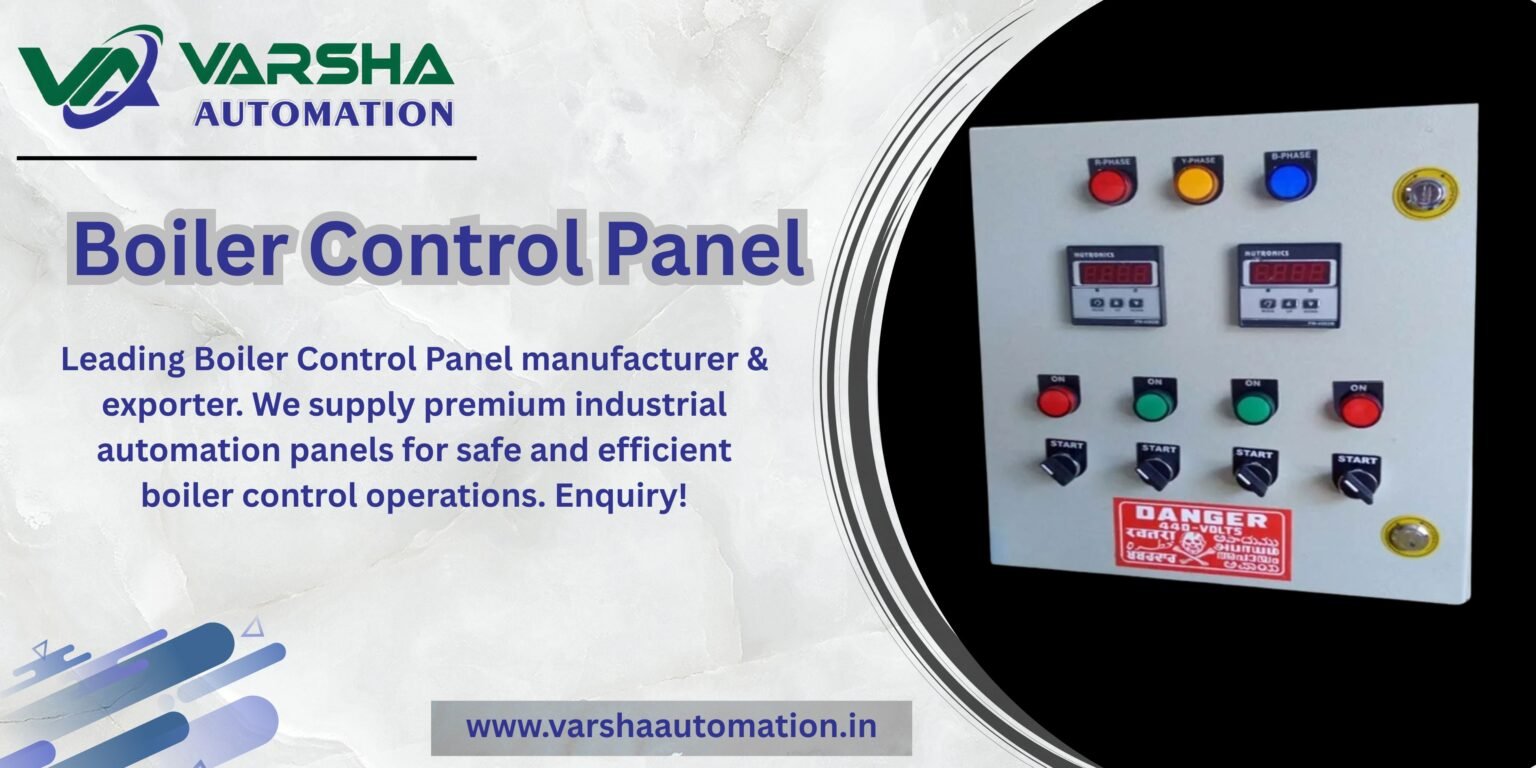
Boiler Control Panel Manufacturer In India
Boilers are among the most critical pieces of equipment used in industries such as food processing, pharmaceuticals, chemicals, textiles, paper mills, power plants, and manufacturing facilities. Since boilers operate under high pressure and temperature conditions, precise monitoring and control are essential for ensuring safety, efficiency, and reliable performance. This is where a Boiler Control Panel plays a vital role.
A Boiler Control Panel is a centralized electrical control system designed to monitor, control, and protect boiler operations. It manages various boiler functions including burner operation, water level control, temperature regulation, pressure monitoring, fuel management, safety interlocks, and alarm systems.
Modern Boiler Control Panels combine automation technology, PLC systems, sensors, and intelligent monitoring capabilities to improve boiler efficiency while reducing fuel consumption and operational risks. Whether used in steam boilers, hot water boilers, thermic fluid heaters, or industrial heating systems, boiler control panels help maintain stable and safe operations.
What is a Boiler Control Panel?
A Boiler Control Panel is an electrical control system that manages the complete operation of an industrial or commercial boiler. It acts as the central command unit that receives data from various sensors and automatically controls different boiler functions.
The panel continuously monitors important operating parameters and takes corrective actions whenever required to maintain safe and efficient boiler performance.
Its primary functions include:
- Boiler start and stop control
- Burner management
- Water level monitoring
- Pressure control
- Temperature control
- Safety protection
- Alarm generation
- Process automation
By automating boiler operations, control panels help industries improve productivity, reduce fuel costs, and enhance safety.
Importance of Boiler Control Panels
Boilers operate under demanding conditions and require continuous monitoring. A Boiler Control Panel ensures that all boiler systems function within safe operating limits.
Improved Safety
The panel continuously monitors critical parameters and prevents unsafe operating conditions.
Better Fuel Efficiency
Optimized combustion control reduces fuel consumption.
Reduced Manual Intervention
Automation minimizes the need for constant operator supervision.
Consistent Steam Production
Maintains stable pressure and temperature levels.
Lower Maintenance Costs
Early fault detection helps prevent major breakdowns.
Enhanced Equipment Protection
Protective systems safeguard critical boiler components.
Working Principle of a Boiler Control Panel
A Boiler Control Panel operates by collecting information from sensors installed throughout the boiler system and using that data to control various processes.
Sensor Monitoring
Sensors continuously measure:
- Boiler pressure
- Water level
- Temperature
- Fuel flow
- Air flow
Signal Processing
The control system receives input signals and compares them with predefined operating parameters.
Automatic Control
Based on process requirements, the panel adjusts:
- Burner operation
- Feed water supply
- Air-fuel ratio
- Temperature settings
Safety Monitoring
The panel continuously checks for abnormal conditions and activates safety systems when required.
Alarm Generation
Faults and warnings are immediately communicated to operators.
Shutdown Protection
If dangerous conditions occur, the panel can automatically shut down the boiler to prevent damage or accidents.
Major Components of a Boiler Control Panel
PLC Controller
The PLC acts as the brain of the system and executes control logic for automated boiler operation.
Functions:
- Process automation
- Data processing
- Safety management
- Equipment control
HMI Touchscreen
The Human Machine Interface allows operators to monitor and control boiler operations.
Features:
- Real-time monitoring
- Alarm display
- Parameter adjustments
- Historical data viewing
Pressure Controller
Maintains desired steam or water pressure levels.
Benefits:
- Stable operation
- Energy efficiency
- Improved process control
Temperature Controller
Regulates boiler temperature according to operating requirements.
Advantages:
- Consistent heating
- Reduced energy waste
- Enhanced safety
Water Level Controller
Maintains proper water levels within the boiler.
Importance:
- Prevents dry firing
- Protects boiler tubes
- Ensures safe operation
Burner Management System
Controls fuel combustion and burner operation.
Functions:
- Burner sequencing
- Flame monitoring
- Fuel control
- Ignition management
Safety Relays
Provide critical protection functions.
Protection Features:
- High pressure shutdown
- Low water level shutdown
- Flame failure protection
- Emergency stop functions
Alarm System
Alerts operators when abnormal conditions occur.
Common Alarms:
- High pressure
- Low water level
- High temperature
- Burner fault
- Fuel supply issues
Types of Boiler Control Panels
Manual Boiler Control Panel
Requires operator intervention for most control functions.
Suitable For:
- Small boiler systems
- Basic applications
Semi-Automatic Boiler Control Panel
Combines manual operation with automatic safety functions.
Benefits:
- Improved control
- Enhanced safety
- Lower operating costs
Fully Automatic Boiler Control Panel
Provides complete automation of boiler operations.
Features:
- Automatic startup and shutdown
- Real-time monitoring
- Advanced protection systems
PLC-Based Boiler Control Panel
Uses programmable logic controllers for intelligent process management.
Advantages:
- Flexible programming
- Advanced automation
- Easy integration
SCADA Integrated Boiler Control Panel
Provides centralized monitoring and remote operation capabilities.
Benefits:
- Remote access
- Data logging
- Process optimization
Applications of Boiler Control Panels
Boiler Control Panels are widely used across numerous industries.
Food Processing Industry
Controls steam generation for cooking, sterilization, and processing operations.
Benefits:
- Consistent production quality
- Reliable steam supply
Pharmaceutical Industry
Maintains precise steam and temperature conditions.
Benefits:
- Regulatory compliance
- Process accuracy
Textile Industry
Controls boilers used in dyeing, washing, and finishing processes.
Benefits:
- Stable temperature control
- Improved production efficiency
Chemical Industry
Manages process heating and steam generation.
Benefits:
- Enhanced process control
- Improved safety
Paper Industry
Supports steam-based production systems.
Benefits:
- Efficient operations
- Reduced downtime
Power Plants
Controls auxiliary and steam generation boilers.
Benefits:
- Reliable performance
- Improved efficiency
Advantages of Boiler Control Panels
Enhanced Safety
Protective systems reduce the risk of accidents and equipment damage.
Improved Boiler Efficiency
Optimized control improves combustion and heat transfer efficiency.
Fuel Savings
Efficient burner management reduces fuel consumption.
Reduced Human Error
Automation minimizes operator mistakes.
Better Process Control
Maintains consistent operating conditions.
Lower Operating Costs
Improved efficiency reduces overall expenses.
Increased Equipment Life
Controlled operation reduces wear and stress on components.
Continuous Monitoring
Provides real-time visibility into boiler performance.
Modern Features of Boiler Control Panels
Modern boiler control systems include advanced technologies that improve performance and reliability.
PLC Automation
Provides intelligent process control.
Touchscreen HMI
Simplifies monitoring and operation.
SCADA Integration
Allows centralized supervision of multiple boilers.
Remote Monitoring
Enables access from remote locations.
IoT Connectivity
Supports smart boiler management systems.
Data Logging
Stores operational history for analysis.
Energy Management
Monitors fuel consumption and efficiency.
Predictive Maintenance
Identifies potential issues before failures occur.
Factors to Consider When Selecting a Boiler Control Panel
Boiler Capacity
Choose a panel suitable for boiler size and output.
Fuel Type
Consider compatibility with gas, oil, biomass, or solid fuel systems.
Automation Requirements
Determine the level of automation needed.
Safety Features
Ensure adequate protection systems are included.
Communication Requirements
Evaluate integration with PLC, SCADA, and monitoring systems.
Environmental Conditions
Select suitable enclosure ratings for installation environments.
Future Expansion
Allow flexibility for system upgrades.
Maintenance of Boiler Control Panels
Regular maintenance ensures reliable and safe operation.
Inspect Electrical Connections
Check for loose terminals and wiring issues.
Test Safety Devices
Verify proper operation of protection systems.
Calibrate Sensors
Maintain accurate monitoring and control.
Clean Internal Components
Prevent dust accumulation and overheating.
Review Alarm Systems
Ensure proper fault notification.
Perform Preventive Maintenance
Scheduled inspections reduce unexpected downtime.
Future of Boiler Control Panel Technology
Boiler automation technology continues to evolve with advancements in industrial automation.
Emerging trends include:
- Smart Boiler Management Systems
- AI-Based Combustion Optimization
- Cloud Monitoring Platforms
- Predictive Maintenance Solutions
- Energy Analytics
- Remote Diagnostics
- Industry 4.0 Integration
- Advanced Safety Systems
These innovations are helping industries improve efficiency, reliability, and sustainability.
Conclusion
A Boiler Control Panel is an essential component for ensuring safe, efficient, and reliable boiler operations. By automating critical functions such as pressure control, temperature regulation, burner management, and safety monitoring, these panels help industries optimize performance while reducing operating costs and risks.
From food processing and pharmaceuticals to power plants and manufacturing facilities, Boiler Control Panels play a vital role in maintaining uninterrupted steam generation and process efficiency. As automation technologies continue to advance, modern boiler control systems will remain at the center of intelligent and energy-efficient industrial operations.