




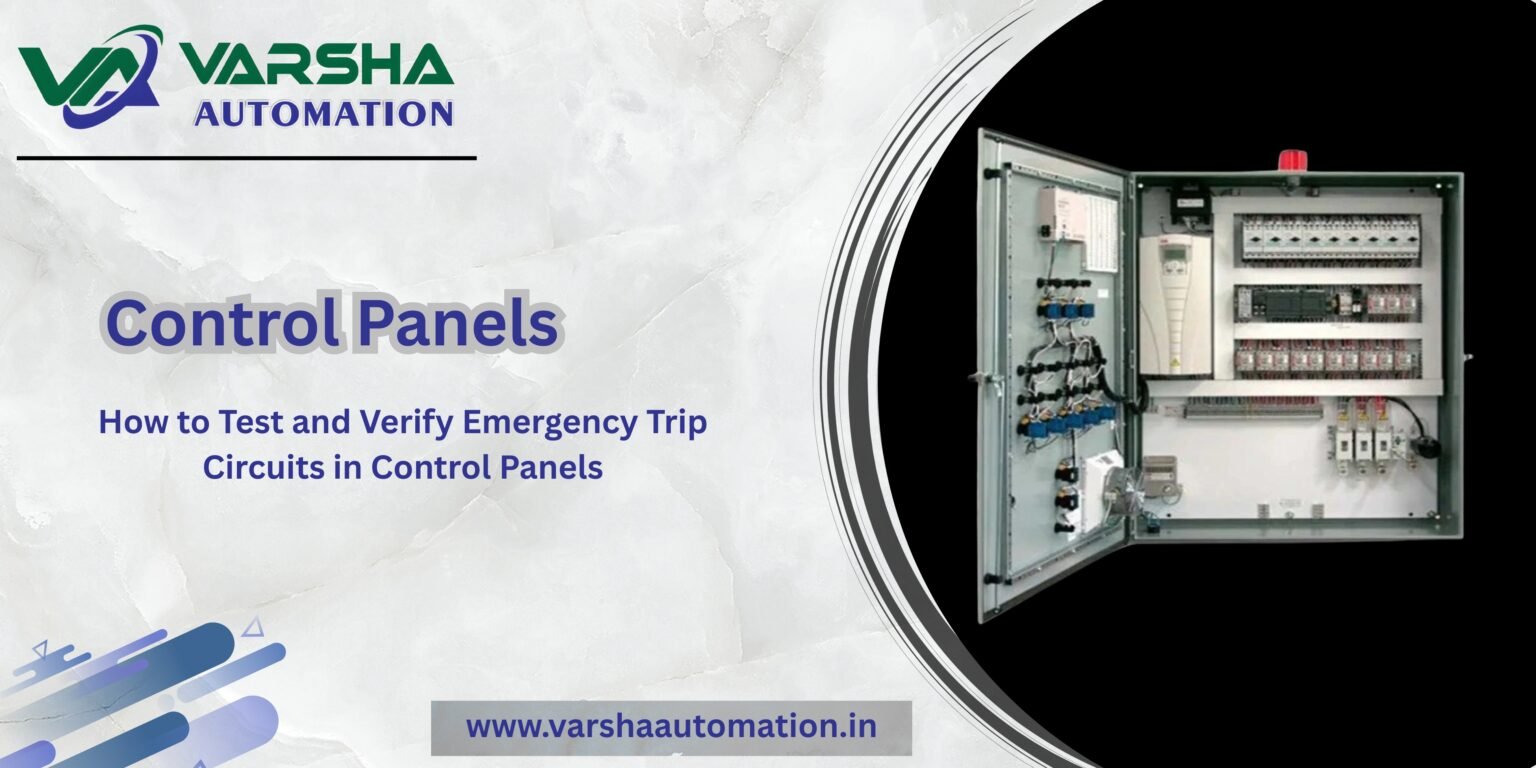
How to Test and Verify Emergency Trip Circuits in Control Panels
In any industrial setting, operator safety is the top priority. Every custom-built control panel features emergency stop (E-stop) buttons and hardwired safety trip circuits designed to cut power instantly to hazardous machinery when an accident or equipment failure threatens workers.
However, installing a safety circuit is only half the battle. Over time, mechanical wear, dust accumulation, or loose wiring can compromise the integrity of these life-saving loops. Regular verification ensures that when an operator hits the red button, the system responds without delay.
Key Components of an Emergency Trip Circuit
1. Push-Button Actuators and Contacts
Physical E-stop buttons rely on normally closed (NC) contact blocks. When pressed, these contacts open to break the safety loop. If contacts weld together over time due to electrical arcing, the button may fail to open the circuit.
2. Safety Relays and Controllers
Dedicated safety relays monitor the status of the E-stop loops, verifying that dual channels match and that no ground faults exist before allowing machinery to start.
3. Output Actuation (Contactors and Shunt Trips)
When the safety relay trips, it immediately drops out main power contactors or triggers breaker shunt trip coils to isolate power from motors, heaters, and drives.
Step-by-Step Testing Procedure
Conduct Visual and Mechanical Checks: Inspect all physical E-stop push buttons for damage, smooth latching/unlatching movement, and secure terminal wiring behind the panel door.
Perform Functional Loop Testing: With the machinery safely powered down or in test mode, press each E-stop button individually. Verify that the safety relay drops out instantly and that the associated output contactors open.
Check Reset Logic: Ensure that the system cannot restart automatically once an E-stop button is released, requiring a deliberate manual reset sequence as mandated by industrial safety codes.
Conclusion
Routine verification of safety loops protects your personnel and prevents unexpected regulatory compliance failures. Building safe, compliant operations starts with robust internal architecture. For complete peace of mind in heavy industrial environments, integrating a thoroughly tested PLC Scada Panel provides centralized safety interlocks and dependable real-time emergency monitoring.