




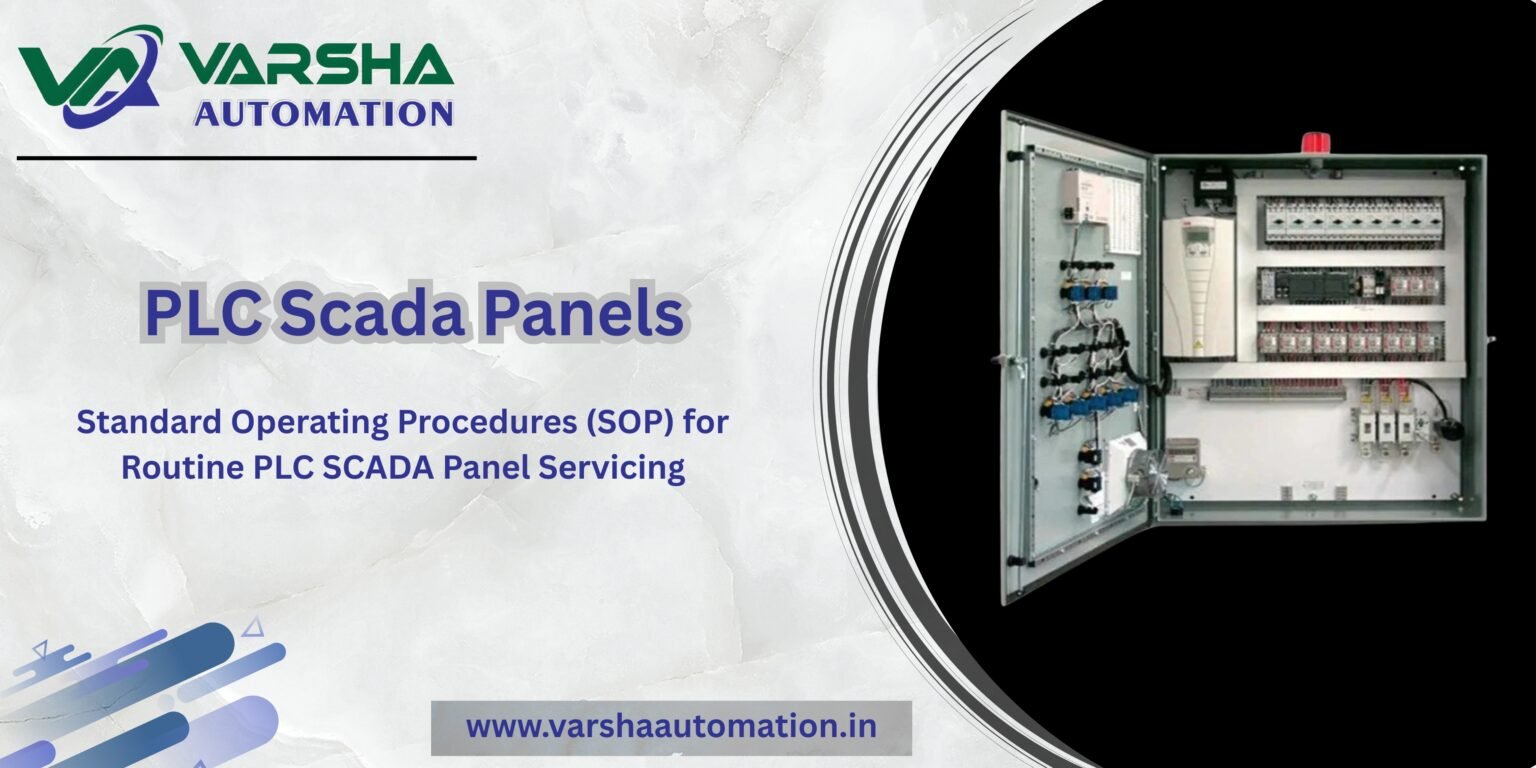
Standard Operating Procedures (SOP) for Routine PLC SCADA Panel Servicing
Programmable Logic Controllers (PLCs) and Supervisory Control and Data Acquisition (SCADA) systems form the digital nerve center of modern manufacturing facilities. They coordinate complex sequences, monitor field instrumentation, and present real-time dashboards to operators.
However, ignoring routine hardware servicing and software hygiene can lead to unexpected memory corruption, communication bottlenecks, and controller crashes. Establishing a clear Standard Operating Procedure (SOP) for routine panel maintenance keeps your automation infrastructure running at peak performance.
Key Elements of a PLC SCADA Servicing Routine
1. Software Backups and Program Verification
Hardware can be replaced easily, but a lost or corrupted PLC program can halt plant operations indefinitely. Routine servicing must always begin with pulling fresh backups of the current PLC logic, HMI screens, and SCADA configuration files, storing them securely off-site.
2. Environmental and Air Filtration Checks
Automation enclosures generate internal heat, requiring cooling fans or air conditioner units. Clogged cabinet air filters restrict airflow, causing internal temperatures to rise and stressing microprocessors, power supply units, and communication modules.
3. Battery Backup and Memory Health
Many PLCs use internal lithium batteries to maintain RAM data and real-time clocks during power outages. Neglecting battery replacement warnings leads to complete program loss when a power interruption occurs.
Step-by-Step Maintenance Checklist
Inspect Cabinet Cooling and Clean Filters: Power down or carefully service cabinet cooling fans. Clean or replace washable dust filters to maintain optimal internal ventilation.
Check Controller Diagnostic LEDs: Inspect CPU, power supply, and network module status lights for warning indicators or intermittent error codes.
Verify Terminal Tightness: Ensure low-voltage signal wiring, digital input/output terminal blocks, and ground connections remain secure against industrial vibration.
Conclusion
Routine digital and physical upkeep prevents sudden controller failures and extends the operational life of your control architecture. When building automated plants requiring precision architecture, investing in a high-grade, expertly crafted PLC Scada Panel ensures clean signal routing, reliable processing power, and maximum long-term uptime.