




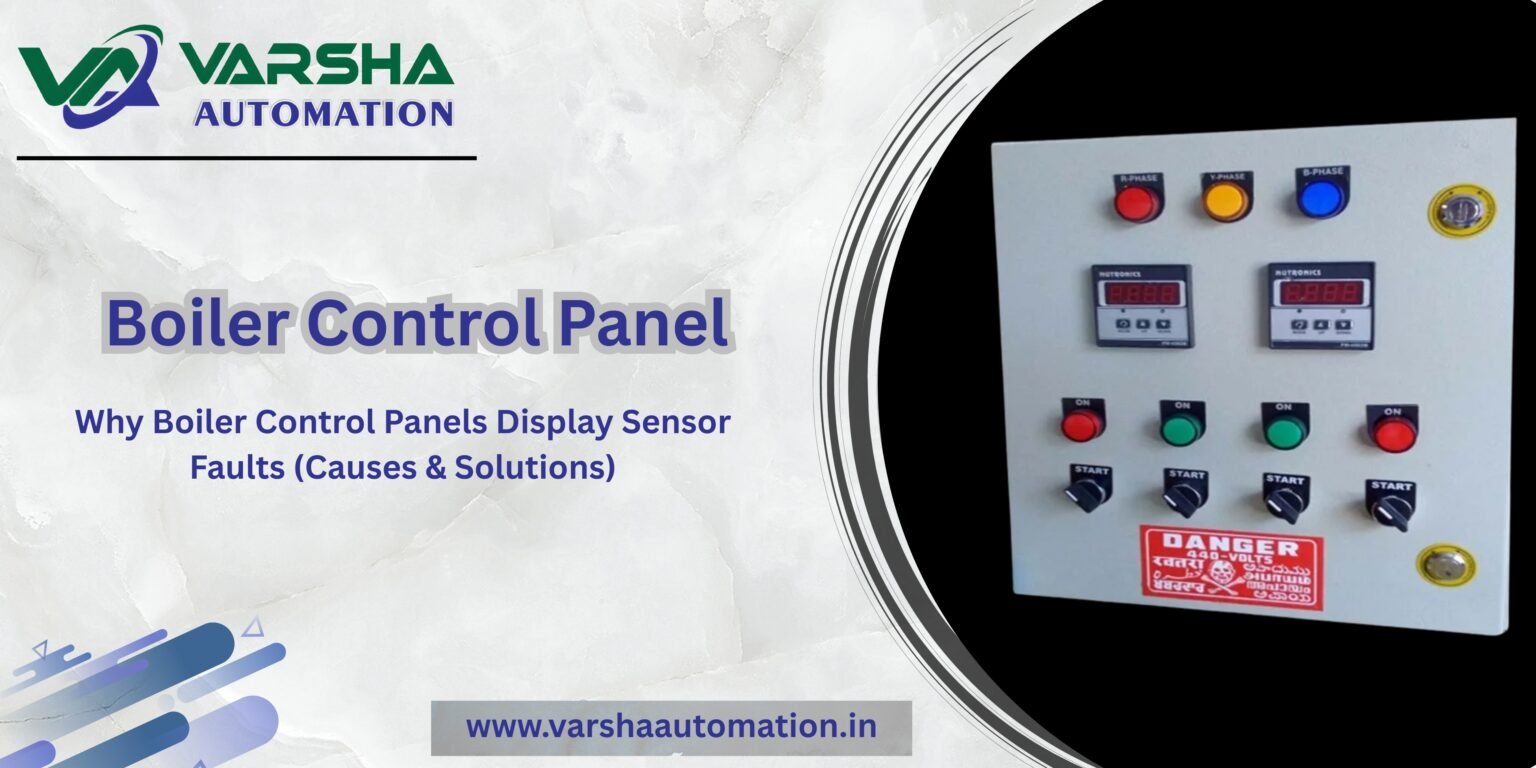
Why Boiler Control Panels Display Sensor Faults (Causes & Solutions)
Industrial boilers operate under extreme temperature and pressure, making precise instrumentation vital for safe operation. The boiler control panel relies entirely on real-time data from various field sensors—such as thermocouples, pressure transmitters, and water level gauges—to regulate fuel feed and ignition.
When the panel displays a sensor fault or error code, it usually forces the system into a safe shutdown mode to prevent catastrophic failures. Understanding what triggers these errors helps maintenance teams resolve issues swiftly.
Common Causes of Sensor Faults
1. Wiring Damage and Signal Degradation
Sensors are often exposed to high ambient heat, moisture, and continuous vibration. Over time, signal cables running from the boiler body to the control enclosure can degrade, crack, or suffer from loose terminal connections, resulting in erratic or lost data signals.
2. Scale and Soot Buildup on Probes
In heavy-duty steam boilers, direct-contact sensors like temperature wells, level probes, and pressure ports can accumulate mineral scale, soot, or sludge. This buildup acts as an insulator, skewing accurate measurements and triggering out-of-range alarms in the controller.
3. Electromagnetic Interference (EMI) from Actuators
High-voltage wiring powering nearby draft fans, feed pumps, or igniter transformers can create strong magnetic fields. If sensor signal lines lack proper shielding or run too close to power cables, the induced electrical noise corrupts the low-voltage analog inputs.
How to Diagnose and Resolve Sensor Errors
Verify Loop Resistance and Continuity: Use a multimeter to check the continuity and loop resistance of 4-20mA sensor circuits to ensure there are no breaks or high-resistance points.
Clean and Calibrate Probes: Regularly inspect, clean, and recalibrate physical probes to remove scale and soot accumulations that hinder accurate environmental readings.
Inspect Grounding and Shielding: Confirm that all analog signal cable shields are properly grounded at the designated control panel terminal to filter out external electrical noise.
Conclusion
Promptly addressing sensor discrepancies keeps your heating systems running safely within regulatory thresholds. When operating heavy thermal assets, investing in robust automation architecture is essential. For facilities requiring dependable thermal management, incorporating a high-precision Boiler Control Panel ensures accurate monitoring, automated safety interlocks, and uninterrupted industrial heating operations.