




Troubleshooting Common PLC Communication Errors in Industrial Automation
Programmable Logic Controllers (PLCs) serve as the brain of modern factory automation, coordinating signals from sensors, drives, and HMI screens. However, when communication links drop between the controller and field devices, the entire production line can grind to an abrupt halt.
Diagnosing network failures quickly requires a systematic approach to isolate whether the issue stems from hardware faults, configuration mismatches, or physical cabling damage.
Common Causes of PLC Communication Drops
1. Physical Cabling and Termination Failures
Industrial environments are harsh. Constant vibrations, mechanical stress, or accidental pinching can damage Ethernet cables, RS-485 serial lines, or fieldbus connections, leading to intermittent data packets or complete signal loss.
2. Electromagnetic Interference (EMI)
Running low-voltage communication cables parallel to high-voltage power lines or heavy-duty motor feeds induces electrical noise. This interference corrupts data packets transmitted over protocols like Modbus, Profibus, or industrial Ethernet.
3. IP Addressing and Configuration Conflicts
Duplicate IP addresses on an industrial network or incorrect baud rate settings on serial connections will immediately prevent devices from handshaking with the master PLC.
Step-by-Step Troubleshooting Guide
Inspect Physical Links First: Verify that all RJ45 connectors, terminal blocks, and communication cards are securely seated. Look for physical cuts or fraying in the cable jackets.
Verify Network Parameters: Double-check node addresses, subnet masks, gateway configurations, and baud rates in your programming software against physical hardware settings.
Check for Grounding Issues: Ensure that the shields of shielded twisted-pair cables are grounded properly at one end to prevent ground loops while mitigating EMI.
Conclusion
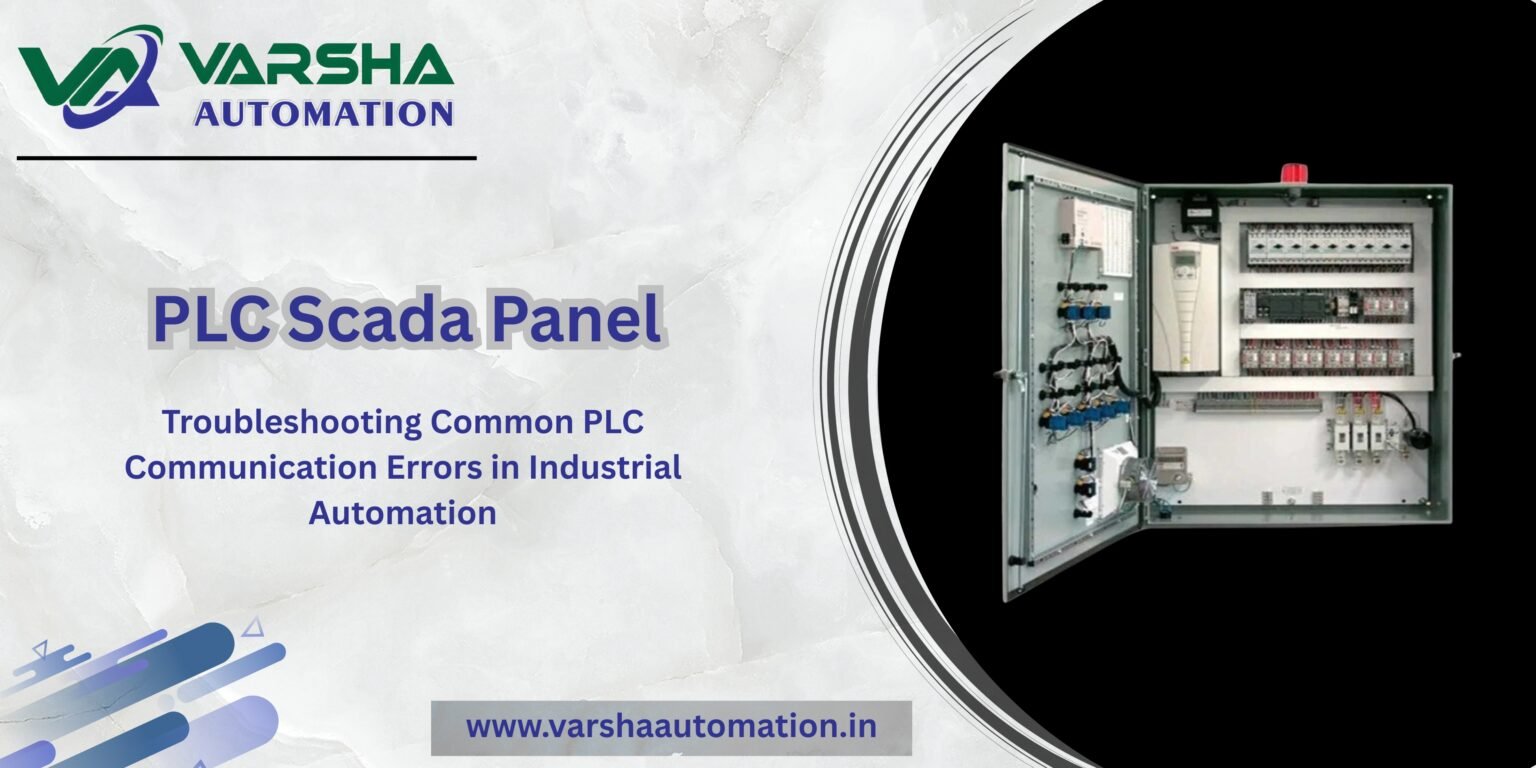
Maintaining robust communication networks is vital for keeping automated plants running smoothly. When designing control architectures, ensuring proper layout and component separation helps prevent interference from the start. For industrial plants looking to upgrade or install robust automation setups, utilizing a well-engineered PLC Scada Panel ensures seamless integration across all your plant machinery and software interfaces.