




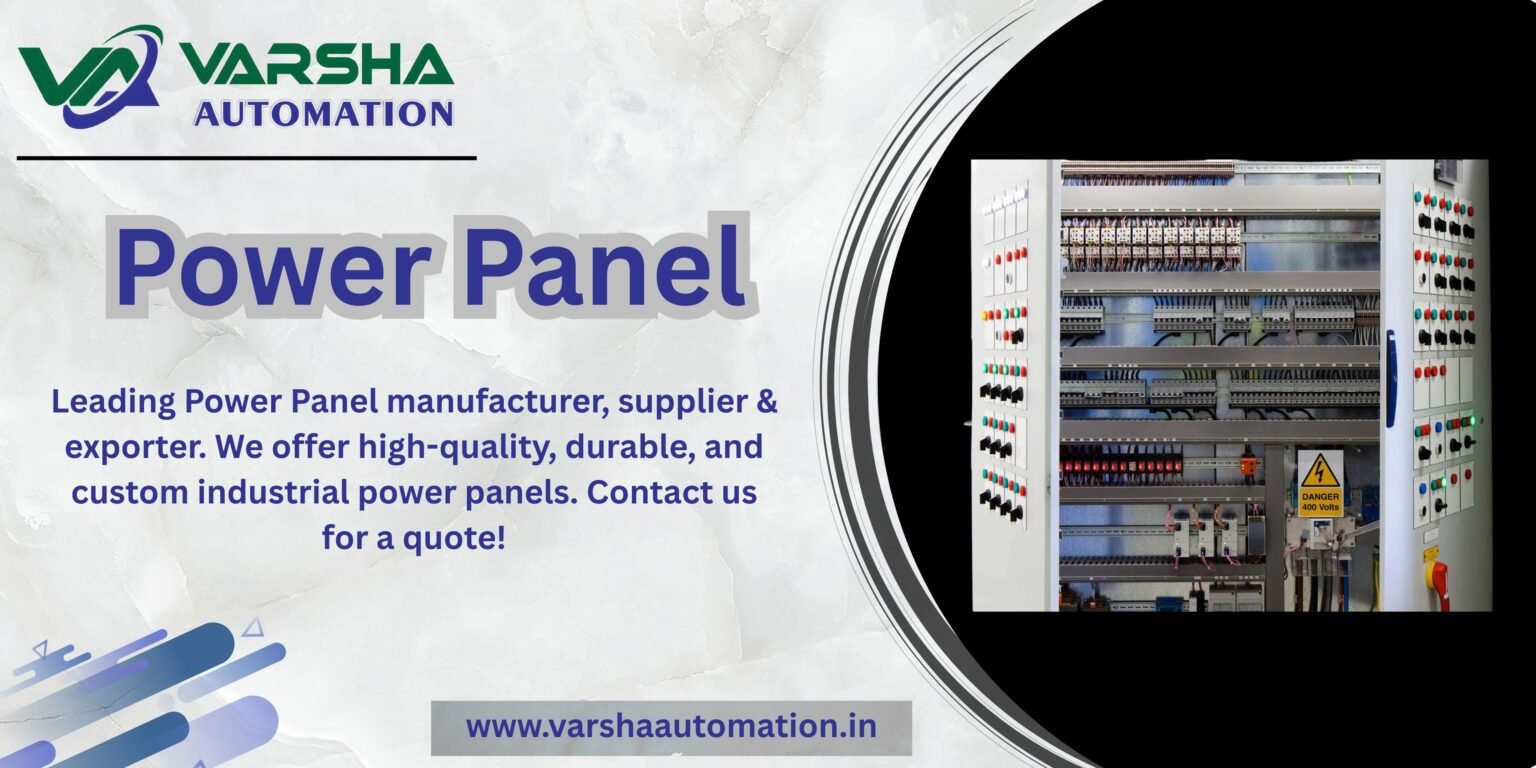
Power Panel Manufacturer In Ahmedabad , India
Electrical power is the backbone of every industrial facility, commercial building, manufacturing plant, and infrastructure project. To ensure safe, reliable, and efficient power distribution, industries require a centralized system capable of receiving electrical power and distributing it to various loads. This critical function is performed by a Power Panel.
A Power Panel is one of the most important components of an electrical distribution system. It receives electrical power from transformers or generators and distributes it to different equipment, machinery, MCC panels, lighting systems, HVAC units, and production lines while providing protection and control functions.
Modern industries depend on power panels to maintain uninterrupted operations, improve electrical safety, reduce downtime, and manage energy efficiently. Whether in manufacturing plants, commercial complexes, hospitals, data centers, or processing industries, power panels serve as the foundation of electrical infrastructure.
What is a Power Panel?
A Power Panel is an electrical distribution panel designed to receive electrical power from the main source and distribute it safely to various electrical loads within a facility.
The panel houses electrical components such as:
- Circuit Breakers
- Bus Bars
- Switchgear
- Protective Relays
- Energy Meters
- Control Devices
- Monitoring Systems
Its primary purpose is to ensure proper power distribution while protecting equipment from electrical faults such as overloads, short circuits, and voltage fluctuations.
Power panels are commonly installed in industrial plants, factories, commercial buildings, and utility systems where reliable power management is essential.
Importance of Power Panels
In modern electrical systems, power panels play a critical role in ensuring smooth operations.
Safe Power Distribution
Power panels distribute electricity safely throughout the facility.
Equipment Protection
Protective devices prevent damage caused by electrical faults.
Centralized Control
Operators can monitor and control electrical systems from a single location.
Improved Reliability
Power panels help maintain uninterrupted power supply.
Enhanced Safety
Built-in protection mechanisms reduce electrical hazards.
Efficient Energy Management
Modern power panels support energy monitoring and optimization.
Working Principle of a Power Panel
The operation of a power panel follows a structured process.
Power Reception
Electrical power enters the panel from a transformer, generator, or utility source.
Main Switching
The incoming power passes through the main circuit breaker or isolator.
Power Distribution
Electrical energy is distributed through bus bars to various outgoing feeders.
Load Supply
Each feeder supplies power to specific equipment or electrical systems.
Protection Monitoring
Protection devices continuously monitor system conditions.
Fault Isolation
In the event of an overload or short circuit, the affected feeder is automatically disconnected.
System Monitoring
Operators can monitor voltage, current, power consumption, and system status.
Main Components of a Power Panel
A power panel consists of several important electrical components.
Main Circuit Breaker
Controls and protects the entire panel from major electrical faults.
Bus Bar System
Acts as the main conductor for distributing electrical power.
MCCB (Molded Case Circuit Breaker)
Protects individual outgoing circuits.
ACB (Air Circuit Breaker)
Used in high-capacity industrial power panels.
Protective Relays
Provide fault detection and protection.
Energy Meter
Measures electrical consumption and system performance.
Voltmeters and Ammeters
Monitor voltage and current levels.
Selector Switches
Allow operators to select monitoring functions.
Indicator Lamps
Display operating conditions and fault status.
Surge Protection Devices
Protect equipment from voltage spikes and lightning surges.
Types of Power Panels
LT Power Panel
Low Tension Power Panels are used for distributing low-voltage power.
Commonly installed in:
- Factories
- Commercial Buildings
- Hospitals
- Shopping Complexes
Features
- Safe power distribution
- Compact design
- Easy maintenance
HT Power Panel
High Tension Power Panels handle higher voltage applications.
Used in:
- Large Industrial Plants
- Utility Installations
- Infrastructure Projects
Features
- High voltage handling capability
- Enhanced safety systems
- Reliable performance
Types of Power Panels
LT Power Panel
Low Tension Power Panels are used for distributing low-voltage power.
Commonly installed in:
- Factories
- Commercial Buildings
- Hospitals
- Shopping Complexes
Features
- Safe power distribution
- Compact design
- Easy maintenance
HT Power Panel
High Tension Power Panels handle higher voltage applications.
Used in:
- Large Industrial Plants
- Utility Installations
- Infrastructure Projects
Features
- High voltage handling capability
- Enhanced safety systems
- Reliable performance
Main Distribution Panel
Acts as the central distribution point for an electrical facility.
Receives power directly from transformers or generators.
Functions
- Power distribution
- System protection
- Load management
Sub Distribution Panel
Receives power from the main panel and distributes it to specific areas.
Suitable for:
- Production Units
- Office Buildings
- Industrial Departments
Automatic Power Panel
Integrated with automation systems for intelligent control and monitoring.
Benefits
- Automatic operation
- Remote monitoring
- Improved efficiency
Applications of Power Panels
Power panels are used across various industries and sectors.
Manufacturing Industry
Distributes power to production machinery and equipment.
Pharmaceutical Industry
Supports process equipment and utility systems.
Food Processing Industry
Provides power to production lines and packaging systems.
Textile Industry
Operates spinning, weaving, and finishing machinery.
Chemical Industry
Supplies power to pumps, reactors, and processing equipment.
Commercial Buildings
Distributes power to lighting, elevators, and HVAC systems.
Hospitals
Ensures reliable power supply for critical medical equipment.
Data Centers
Supports servers, cooling systems, and backup infrastructure.
Power Plants
Used for internal power distribution and control.
Advantages of Power Panels
Reliable Power Distribution
Ensures stable electrical supply throughout the facility.
Improved Electrical Safety
Protective devices reduce the risk of accidents.
Centralized Monitoring
Operators can monitor system performance easily.
Reduced Downtime
Quick fault detection improves operational continuity.
Flexible Design
Panels can be customized according to application requirements.
Energy Efficiency
Supports energy monitoring and management systems.
Easy Maintenance
Organized layouts simplify servicing and troubleshooting.
Power Panel vs MCC Panel
Many people confuse power panels and MCC panels, but they perform different functions.
Power Panel
- Distributes electrical power
- Feeds multiple electrical loads
- Focuses on power management
MCC Panel
- Controls electric motors
- Includes motor starters and protection devices
- Focuses on motor operation
In most industrial facilities, power panels supply power to MCC panels and other electrical systems.
Modern Features of Power Panels
Today’s power panels incorporate advanced technologies.
PLC Integration
Supports automation and intelligent control.
SCADA Connectivity
Allows centralized monitoring and control.
Energy Monitoring Systems
Track electrical consumption in real time.
Remote Access
Enables remote diagnostics and monitoring.
Smart Protection Relays
Improve fault detection accuracy.
IoT Connectivity
Supports Industry 4.0 implementation.
Load Management Systems
Optimize power utilization and reduce energy costs.
Factors to Consider When Selecting a Power Panel
Load Capacity
Determine total connected load requirements.
Voltage Rating
Select a panel suitable for operating voltage.
Protection Requirements
Choose appropriate protection devices.
Environmental Conditions
Consider dust, moisture, and temperature conditions.
Future Expansion
Plan for additional loads and equipment.
Compliance Standards
Ensure compliance with electrical regulations.
Automation Requirements
Evaluate communication and monitoring needs.
Maintenance of Power Panels
Regular maintenance is necessary to ensure reliability and safety.
Inspect Electrical Connections
Loose terminals can lead to overheating.
Clean Internal Components
Dust accumulation can reduce performance.
Test Circuit Breakers
Ensure protection devices function properly.
Monitor Load Conditions
Avoid overloading circuits.
Check Bus Bars
Inspect for signs of wear or overheating.
Perform Preventive Maintenance
Scheduled inspections reduce unexpected failures.
Future of Power Panel Technology
The electrical industry is rapidly adopting smart technologies.
Emerging trends include:
- Smart Power Panels
- AI-Based Energy Management
- Predictive Maintenance
- Cloud-Based Monitoring
- Digital Power Distribution
- Remote Diagnostics
- Advanced Cybersecurity Systems
- Industry 4.0 Integration
These advancements are helping industries improve efficiency, reliability, and energy management.
Why Power Panels are Essential for Modern Industries
Without proper power distribution systems, industrial operations would face frequent disruptions, equipment failures, and safety risks. Power panels provide a structured solution for managing electrical energy efficiently while protecting valuable equipment and infrastructure.
Their ability to centralize power distribution, improve safety, support automation, and optimize energy usage makes them indispensable in modern industrial facilities.
Conclusion
A Power Panel is a critical component of industrial and commercial electrical systems, responsible for distributing electrical power safely and efficiently throughout a facility. Equipped with advanced protection, monitoring, and control features, power panels ensure reliable operations while safeguarding equipment from electrical faults.
From manufacturing plants and pharmaceutical facilities to commercial buildings and power generation stations, power panels play a key role in maintaining productivity, safety, and energy efficiency. As industries continue to adopt smart technologies and automation, modern power panels will remain a vital part of efficient electrical infrastructure and power management systems.