




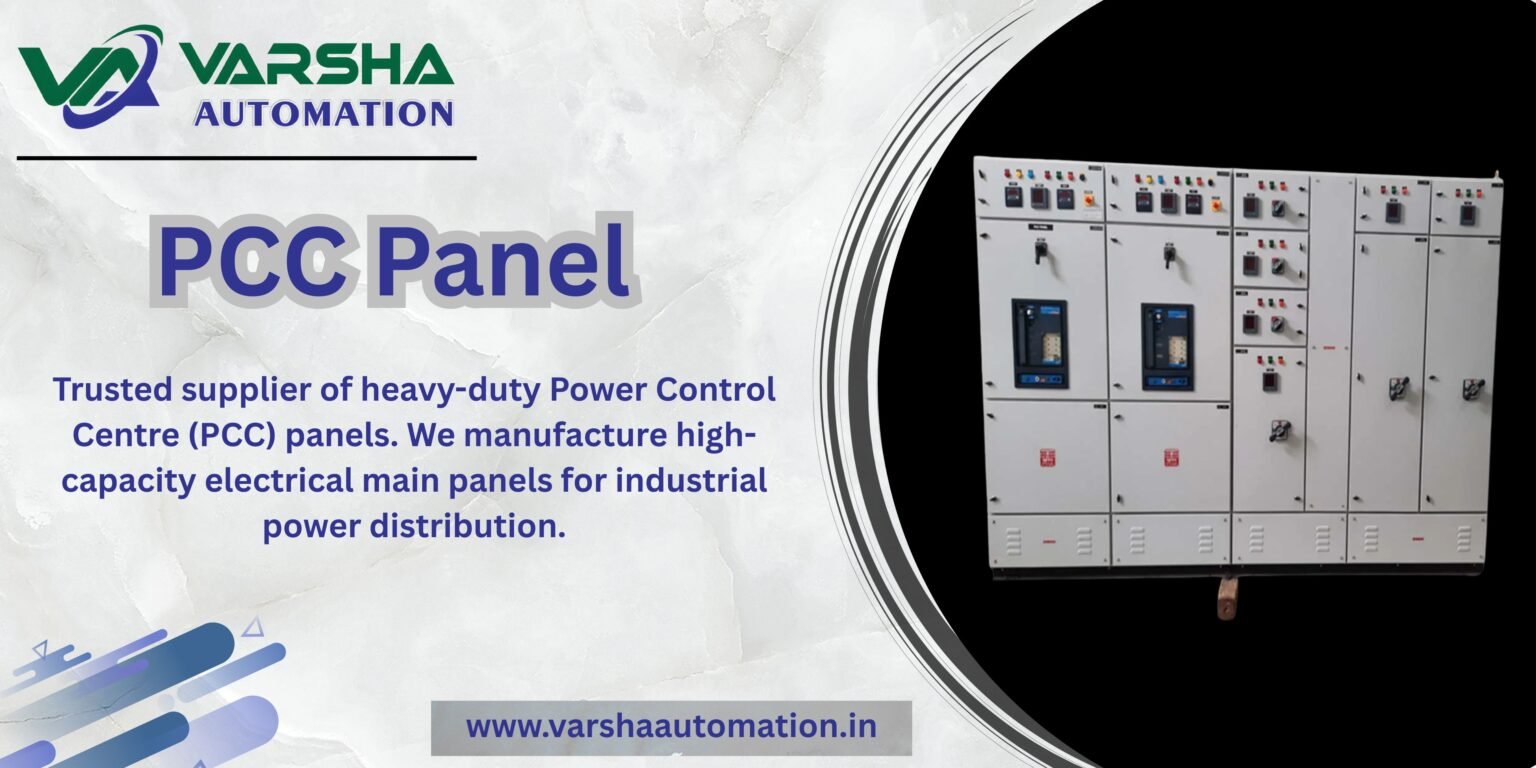
PCC Panel Manufacturer In Ahmedabad , India
Electrical power distribution is one of the most critical aspects of any industrial, commercial, or infrastructure facility. From manufacturing plants and processing units to commercial complexes and utility installations, efficient power management is essential for ensuring smooth operations, equipment safety, and uninterrupted productivity. One of the most important systems responsible for managing and distributing electrical power is the PCC Panel.
A PCC Panel (Power Control Center Panel) serves as the main electrical distribution panel that receives power from transformers or generators and distributes it to various electrical loads, sub-panels, MCC panels, machinery, and equipment within a facility. It acts as the central hub of the electrical distribution system and plays a vital role in maintaining operational reliability and safety.
Modern PCC Panels are designed with advanced protection, monitoring, and control features that help industries manage power efficiently while minimizing downtime and electrical risks. As industries continue to expand and automate, PCC Panels remain a crucial part of every electrical infrastructure system.
What is a PCC Panel?
A PCC Panel (Power Control Center Panel) is a low-voltage electrical distribution panel used for controlling and distributing electrical power throughout an industrial or commercial facility.
The panel receives electrical power from a transformer, diesel generator, or utility source and distributes it through multiple outgoing feeders to various electrical loads.
A PCC Panel typically includes:
- Air Circuit Breakers (ACB)
- Molded Case Circuit Breakers (MCCB)
- Bus Bars
- Protection Relays
- Energy Meters
- Indication Lamps
- Monitoring Instruments
- Control Switches
The primary purpose of a PCC Panel is to provide safe, reliable, and organized power distribution while protecting electrical equipment from faults and abnormal operating conditions.
Importance of PCC Panels in Industrial Facilities
Every industrial facility requires a structured electrical distribution system to ensure smooth operations.
Centralized Power Distribution
The PCC Panel serves as the main point for distributing electrical power throughout the facility.
Enhanced Electrical Safety
Protective devices safeguard equipment and personnel from electrical hazards.
Reliable Power Management
Ensures consistent power supply to critical operations.
Simplified Monitoring
Operators can monitor electrical parameters from a centralized location.
Improved Operational Efficiency
Efficient power distribution supports uninterrupted production.
Equipment Protection
Prevents damage caused by overloads, short circuits, and voltage fluctuations.
Working Principle of a PCC Panel
The PCC Panel operates by receiving electrical power and distributing it safely to connected loads.
Power Input
Electrical power enters the PCC Panel from the main source such as a transformer or generator.
Main Circuit Protection
The incoming supply passes through the main circuit breaker.
Bus Bar Distribution
Power is distributed through bus bars to various outgoing feeders.
Load Supply
Each feeder supplies electricity to designated equipment or distribution panels.
Protection Monitoring
Protective devices continuously monitor system conditions.
Fault Isolation
In case of abnormal conditions, the affected feeder is disconnected automatically.
Continuous Monitoring
Meters and monitoring systems provide real-time information about electrical performance.
Major Components of a PCC Panel
A PCC Panel consists of several important electrical components.
Air Circuit Breaker (ACB)
Acts as the main incoming breaker.
Provides protection against overloads and short circuits.
Molded Case Circuit Breaker (MCCB)
Protects outgoing feeders and connected loads.
Bus Bar System
Distributes electrical power throughout the panel.
Typically manufactured from:
- Copper
- Aluminum
Protection Relays
Detect electrical faults and activate protection mechanisms.
Current Transformers (CT)
Measure current for monitoring and protection purposes.
Potential Transformers (PT)
Measure voltage levels within the system.
Energy Meter
Records electrical energy consumption.
Selector Switches
Allow operators to select various monitoring functions.
Indicator Lamps
Display system status and operating conditions.
Control Wiring
Facilitates communication and control within the panel.
Types of PCC Panels
Indoor PCC Panel
Installed within industrial buildings and electrical rooms.
Advantages
- Protected from environmental conditions
- Easier maintenance
- Compact installation
Outdoor PCC Panel
Designed for external installation environments.
Features
- Weather-resistant enclosure
- Dust protection
- Corrosion resistance
Fixed PCC Panel
Components are permanently installed.
Suitable for standard applications.
Draw-Out PCC Panel
Allows removable breaker units for easier maintenance.
Ideal for large industrial facilities.
Intelligent PCC Panel
Equipped with advanced monitoring and communication systems.
Supports smart power management.
Applications of PCC Panels
PCC Panels are widely used across various industries.
Manufacturing Industry
Distributes power to production machinery and process equipment.
Chemical Industry
Supplies power to reactors, pumps, and processing systems.
Pharmaceutical Industry
Supports production lines and utility systems.
Food Processing Industry
Provides reliable power for processing and packaging equipment.
Textile Industry
Distributes electricity to spinning, weaving, and finishing machinery.
Commercial Buildings
Supports lighting, elevators, HVAC systems, and utilities.
Hospitals
Ensures continuous power distribution for critical medical equipment.
Data Centers
Supplies power to servers, cooling systems, and backup infrastructure.
Infrastructure Projects
Used in airports, railway stations, and public utility systems.
Advantages of PCC Panels
Reliable Power Distribution
Ensures stable power supply across the facility.
Enhanced Equipment Protection
Reduces electrical damage and equipment failures.
Improved Safety
Protective devices minimize electrical hazards.
Centralized Monitoring
Allows efficient supervision of electrical systems.
Easy Maintenance
Organized panel design simplifies servicing.
Expandable Configuration
Supports future system growth and modifications.
Improved Energy Management
Helps monitor and optimize electrical consumption.
Difference Between PCC Panel and MCC Panel
Although PCC Panels and MCC Panels are often installed together, they perform different functions.
PCC Panel
- Main power distribution panel
- Receives power from transformers
- Supplies power to various loads and sub-panels
MCC Panel
- Controls electric motors
- Contains motor starters and protection devices
- Receives power from PCC Panels
In most industrial facilities, the PCC Panel acts as the primary distribution system while MCC Panels handle motor control operations.
Modern Features in PCC Panels
Today’s PCC Panels include advanced technologies for improved performance and monitoring.
PLC Integration
Supports automation and intelligent control.
SCADA Connectivity
Enables centralized monitoring and data acquisition.
Energy Monitoring Systems
Track power consumption and efficiency.
Remote Monitoring
Allows operators to monitor systems remotely.
Smart Protection Relays
Provide advanced fault detection and diagnostics.
IoT Connectivity
Supports Industry 4.0 implementation.
Load Management Systems
Optimize electrical usage and reduce energy costs.
Factors to Consider When Selecting a PCC Panel
Load Requirements
Determine total connected load capacity.
Voltage Rating
Select the appropriate operating voltage.
Fault Current Rating
Ensure adequate short-circuit withstand capability.
Protection Requirements
Choose suitable breakers and protection devices.
Environmental Conditions
Consider installation location and enclosure rating.
Future Expansion
Plan for additional loads and infrastructure growth.
Compliance Standards
Ensure adherence to electrical safety standards.
Maintenance of PCC Panels
Regular maintenance helps ensure safe and reliable operation.
Inspect Electrical Connections
Check for loose terminals and overheating.
Clean Internal Components
Remove dust and contaminants regularly.
Test Circuit Breakers
Verify proper operation of protection devices.
Monitor Load Conditions
Prevent overload situations.
Inspect Bus Bars
Check for signs of damage or corrosion.
Conduct Preventive Maintenance
Scheduled inspections reduce downtime and equipment failures.
Future of PCC Panel Technology
Electrical distribution systems are becoming increasingly intelligent and connected.
Emerging trends include:
- Smart PCC Panels
- AI-Based Energy Management
- Predictive Maintenance
- Cloud Monitoring
- Digital Power Distribution
- Advanced Analytics
- Remote Diagnostics
- Industry 4.0 Integration
These innovations are helping industries improve efficiency, reliability, and sustainability.
Why PCC Panels are Essential for Industrial Operations
Without a reliable power distribution system, industrial operations would face frequent interruptions, equipment failures, and safety risks. PCC Panels provide the foundation for efficient electrical management by ensuring safe power distribution, system protection, and operational continuity.
Their ability to centralize power control, enhance safety, and support modern automation technologies makes them indispensable in industrial and commercial facilities.
Conclusion
A PCC Panel (Power Control Center Panel) is a vital component of any electrical distribution network. It serves as the main hub for receiving, controlling, protecting, and distributing electrical power throughout industrial and commercial facilities.
With advanced protection systems, monitoring capabilities, and intelligent control features, PCC Panels help ensure safe, efficient, and reliable operations. Whether used in manufacturing plants, pharmaceutical facilities, commercial buildings, or infrastructure projects, PCC Panels play a critical role in maintaining productivity and supporting modern electrical systems.
As industries continue to adopt smart technologies and energy-efficient practices, PCC Panels will remain an essential part of future-ready electrical infrastructure.