




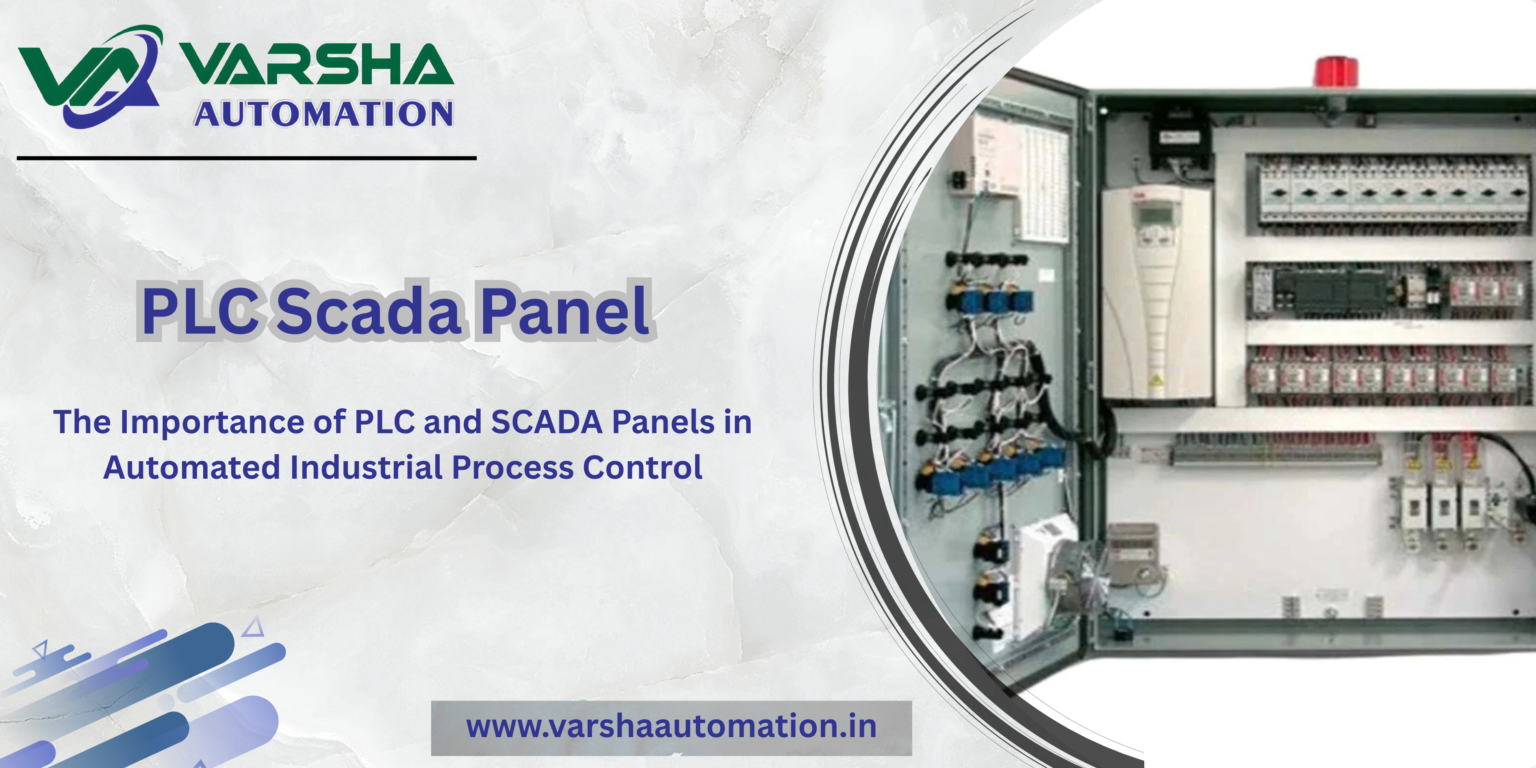
The Importance of PLC and SCADA Panels in Automated Industrial Process Control
In continuous processing plants, automated assembly lines, chemical processing units, and modern power generation facilities, managing complex manufacturing steps manually is no longer viable. Modern industrial processes demand split-second operational decisions, deterministic safety interlocking, continuous parameter tracking, and central supervisory control across thousands of field instruments.
Achieving seamless plant-wide automation and operational precision depends directly on an intelligent PLC Scada Panel.
A PLC SCADA panel integrates programmable logic controllers, Human-Machine Interface touchscreens, managed industrial network switches, signal isolators, power supplies, and safety relays within a secure, interference-shielded enclosure.
Relying on decentralized manual switching or unintegrated control loops leads to human operational errors, slow fault detection, production bottlenecks, quality inconsistencies, and catastrophic safety failures during process upsets. Understanding the core theoretical mechanisms behind central control architecture—including deterministic scan cycles, real-time data acquisition, closed-loop feedback control, and supervisory alarm management—enables automation engineers to deploy scalable manufacturing systems. This comprehensive technical guide provides an in-depth theoretical analysis of the importance of PLC and SCADA panels in automated industrial process control.
Theoretical Control Architecture of PLC and SCADA Assemblies
Industrial automation systems utilize a multi-layered control architecture that separates real-time deterministic field execution from supervisory human visualization:
+-----------------------------------------------------------------+
|                    SUPERVISORY SCADA HMI LEVEL                  |
|  (Central visualization, historical logging, & alarm management)|
+-----------------------------------------------------------------+
                                  |
                                  v
+-----------------------------------------------------------------+
|                   DETERMINISTIC PLC LOGIC LEVEL                 |
| (Executes real-time control algorithms & safety interlocks)     |
+-----------------------------------------------------------------+
                                  |
                                  v
+-----------------------------------------------------------------+
|                  FIELD INSTRUMENTATION & DRIVES                 |
| (Sensors, control valves, motor drives, & field transmitters)   |
+-----------------------------------------------------------------+
1. Deterministic Real-Time Execution at the PLC Layer
-
Theoretical Principle: The programmable logic controller operates on a continuous, deterministic scan cycle consisting of input scanning, program logic execution, diagnostic processing, and output updating. This guarantees that critical safety interlocks and process responses execute within predictable microsecond timeframes regardless of overall network traffic.
-
Closed-Loop Regulation: The PLC continuously compares real-time field measurements against dynamic process setpoints, executing proportional-integral-derivative control algorithms to modulate control valves, heaters, and drive speeds automatically.
2. Supervisory Visualization and Data Aggregation at the SCADA Layer
-
Theoretical Principle: While the PLC executes low-level logic, the SCADA architecture polls controller registers continuously to transform raw binary and analog data into intuitive graphical representations, trend graphs, and actionable diagnostic alerts for plant operators.
-
Centralized Data Historian: SCADA networks archive historical process parameters continuously, creating accurate operational logs for quality audits, predictive maintenance modeling, and overall plant optimization analysis.
System Integration Across Industrial Control Networks
PLC and SCADA panels act as the central intelligence hub, connecting and orchestrating all underlying electrical distribution and drive equipment across a plant:
-
Central Automation Intelligence: Overall process logic, digital recipe management, and safety protocols are centralized within an intelligent PLC Scada Panel.
-
Motor Drive Speed & Torque Regulation: Control algorithms transmit dynamic speed setpoints and start/stop commands to variable speed VFD Panel units and centralized MCC Panel motor drawers.
-
Facility Bulk Power Infrastructure: Primary electrical energy feeding the automation network is distributed via a central Power Panel or heavy-duty PCC Panel (Power Control Center).
-
Grid Backup & Critical Infrastructure Safety: Utility switching and generator synchronizing protocols interface with an automated Synchronize panel, while utility infrastructure is monitored via dedicated Boiler Control Panel and Fire Control Panel enclosures.
Theoretical Best Practices for PLC SCADA Panel Engineering
To maintain maximum signal integrity, high noise immunity, and long-term system stability, automation engineers adhere to three core theoretical guidelines:
-
Enforce Rigid Physical Separation of Signal & Power Wiring: Route low-voltage analog sensor signals and digital communication buses through dedicated shielded wireways, maintaining separation from high-voltage AC power lines to prevent electromagnetic induction noise.
-
Implement Redundant Processing and Power Architectures: Utilize dual redundant power supply units and hot-standby PLC central processing units for critical continuous-process industries to prevent a single component failure from causing plant-wide shutdowns.
-
Establish Robust Isolation and Surge Protection: Incorporate galvanic signal isolators and transient surge protection devices on all incoming field instrumentation channels to protect sensitive electronic controller boards from field ground loops and electrical surges.
Conclusion
Understanding the central importance of PLC and SCADA panels is essential for designing modern, highly automated, and resilient industrial facilities. By combining deterministic logic execution at the controller layer with comprehensive supervisory monitoring at the SCADA level, industrial processing plants achieve high product consistency, reduced operational risk, and optimal manufacturing throughput.
Looking for Custom PLC SCADA Panels and Advanced Industrial Automation Solutions? Explore our full lineup of advanced PLC Scada Panel architectures, specialized VFD Panel modules, centralized MCC Panel drawers, main Power Panel setups, heavy-duty PCC Panel systems, generator Synchronize panel designs, specialized Boiler Control Panel units, and critical Fire Control Panel solutions at Varsha Automation. Contact our expert automation engineering team today.