




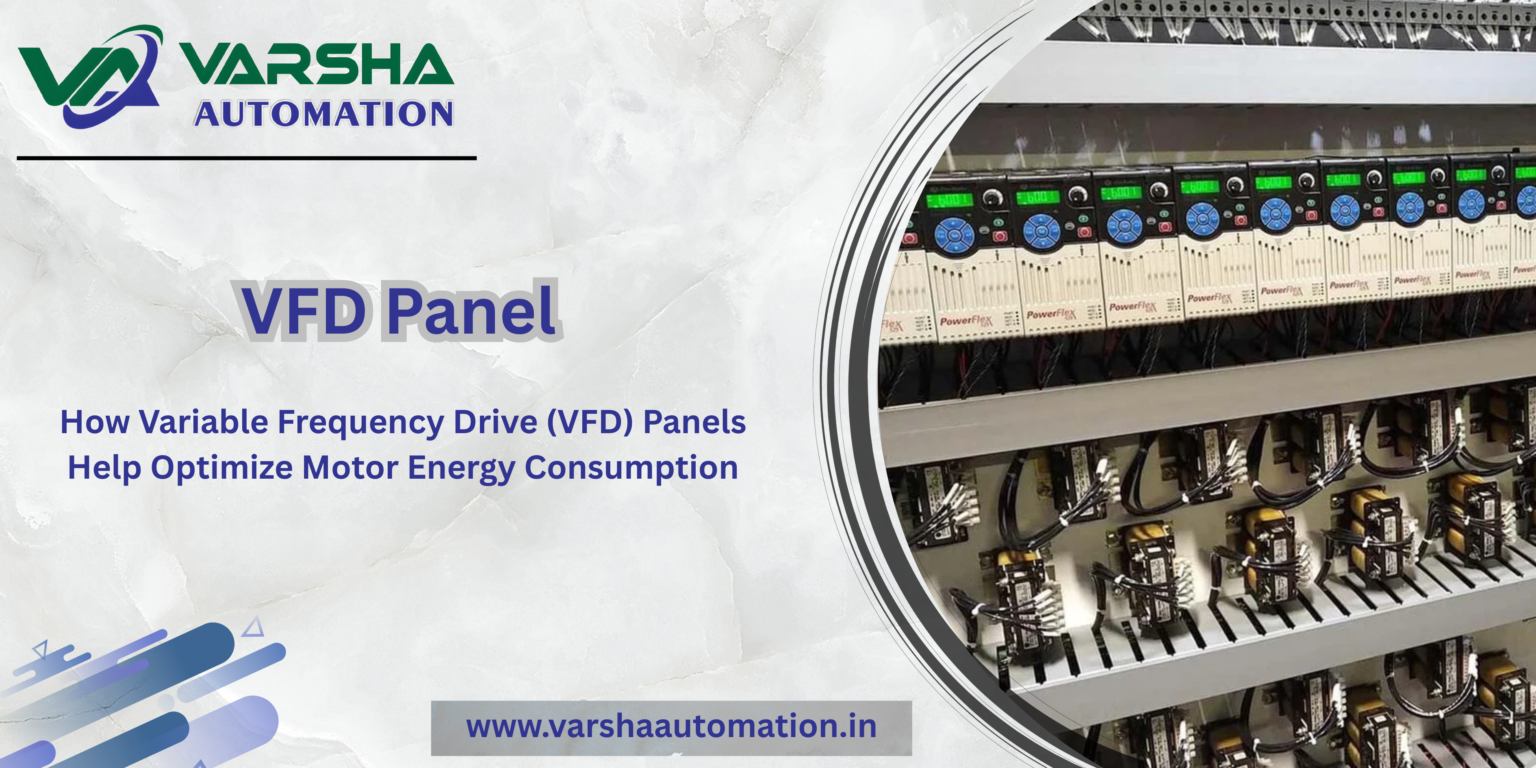
How Variable Frequency Drive (VFD) Panels Help Optimize Motor Energy Consumption
In modern chemical manufacturing, municipal water treatment, HVAC facility management, and continuous material handling industries, electric induction motors represent the single largest consumer of industrial electrical energy. Traditional motor drives operate continuously at fixed line frequency, running at full rated speed regardless of real-time process demand. Controlling fluid or airflow under fixed-speed operation relies on mechanical throttling valves, dampers, or bypass recirculation lines, which wastes substantial electrical energy across continuous operating cycles.
Transitioning from fixed-speed operation to dynamic, load-responsive speed control requires an intelligent VFD Panel (Variable Frequency Drive Panel).
A VFD panel integrates power semiconductor converters, digital control microprocessors, thermal management systems, and protective input/output switchgear within a unified enclosure.
Operating industrial motors directly across line power without variable frequency modulation leads to excessive thermal losses, severe electrical current spikes during startup, mechanical shock to gearboxes, high utility demand charges, and energy inefficiency. Understanding the core theoretical mechanisms behind variable speed energy optimization—including frequency modulation, torque-speed proportionality, affinity law energy reductions, and controlled acceleration—allows automation engineers to minimize plant lifecycle operating costs. This comprehensive technical guide provides an in-depth theoretical analysis of how VFD panels optimize motor energy consumption in industrial processes.
Theoretical Energy Optimization Mechanics in VFD Assemblies
Industrial VFD enclosures achieve electrical energy savings by adjusting supply frequency and voltage to match actual mechanical load demand:
+-----------------------------------------------------------------+
|                   INCOMING THREE-PHASE AC POWER                 |
|   (Receives fixed utility line voltage and constant frequency)  |
+-----------------------------------------------------------------+
                                  |
                                  v
+-----------------------------------------------------------------+
|                 RECTIFIER & DC BUS CAPACITOR LINK               |
|  (Converts fixed AC line power to smooth DC bus voltage)        |
+-----------------------------------------------------------------+
                                  |
                                  v
+-----------------------------------------------------------------+
|                 INVERTER PULSE-WIDTH MODULATION                 |
| (Synthesizes variable frequency & voltage output to the motor)  |
+-----------------------------------------------------------------+
1. Fluid Dynamics and Affinity Laws Reduction
Theoretical Principle: In centrifugal pumps, fans, and blowers, the power absorbed by the motor varies with the cube of the operating rotational speed. Reducing motor speed even slightly yields a disproportionately large reduction in consumed electrical power compared to mechanical throttling.
Thermodynamic Efficiency: Replacing mechanical flow restrictors with frequency-controlled motor speed regulation eliminates artificial hydraulic friction and unnecessary energy dissipation across closed-loop pipe networks.
2. Elimination of High Inrush Starting Currents
Theoretical Principle: Direct-on-line motor starting creates magnetic inrush currents up to seven times the rated full-load operating current. VFD control enclosures eliminate high-current inrush by ramping supply frequency and voltage gradually from zero to operating setpoints.
Grid Demand Reduction: Controlled acceleration limits line voltage sags, reduces peak demand penalties imposed by utility providers, and prevents thermal stress on motor stator insulation.
System Integration Across Industrial Control Networks
Variable frequency drive panel assemblies serve as the key energy-regulating node within comprehensive industrial automation networks:
Variable Speed Drive Enclosures: Specialized VFD Panel units regulate power delivery to centrifugal pumps, fans, extruders, and heavy industrial conveyors.
Upstream Power Distribution: Primary incoming energy feed lines are protected and routed via a centralized Power Panel or heavy-duty PCC Panel (Power Control Center).
Direct Motor Protection Integration: Fixed-speed auxiliary drives operate alongside variable-speed units via modular MCC Panel assemblies.
Automated Supervisory Orchestration: Process setpoints, PID control loops, and operational feedback telemetry are managed by an intelligent PLC Scada Panel.
Utility & Facility Safety Coordination: Emergency auxiliary generator power is synchronized via an automated Synchronize panel, while critical utility services are monitored by a dedicated Boiler Control Panel and a Fire Control Panel.
Theoretical Best Practices for VFD Panel Energy Efficiency
To maximize system energy savings and extend operational longevity across industrial drive networks, design engineers follow three core theoretical guidelines:
Maintain Precise Voltage-to-Frequency (V/Hz) Ratio: Ensure the drive inverter maintains optimal flux density within the motor core, preventing iron core saturation and thermal heat losses under partial load conditions.
Optimize Dynamic Carrier Frequency Settings: Balance inverter switching frequency settings to minimize audible motor noise while preventing excessive heat generation across internal inverter switching transistors.
Incorporate Regenerative Energy Braking Systems: Utilize active front-end converters or regenerative braking modules for high-inertia over-hauling loads, capturing kinetic energy and returning clean power to the facility grid.
Conclusion
Understanding how variable frequency drive panels optimize motor energy consumption is vital for engineering sustainable, cost-effective industrial operations. By leveraging affinity law principles, eliminating starting current spikes, and matching power consumption directly to mechanical load demand, industrial plants achieve major energy savings, reduce carbon footprints, and extend overall equipment service life.
Looking for Custom VFD Panels and Advanced Industrial Automation Solutions? Explore our full lineup of advanced VFD Panel modules, main Power Panel architectures, centralized MCC Panel systems, automated PLC Scada Panel networks, heavy-duty PCC Panel setups, generator Synchronize panel systems, specialized Boiler Control Panel designs, and critical Fire Control Panel solutions at Varsha Automation. Contact our expert electrical engineering team today.