




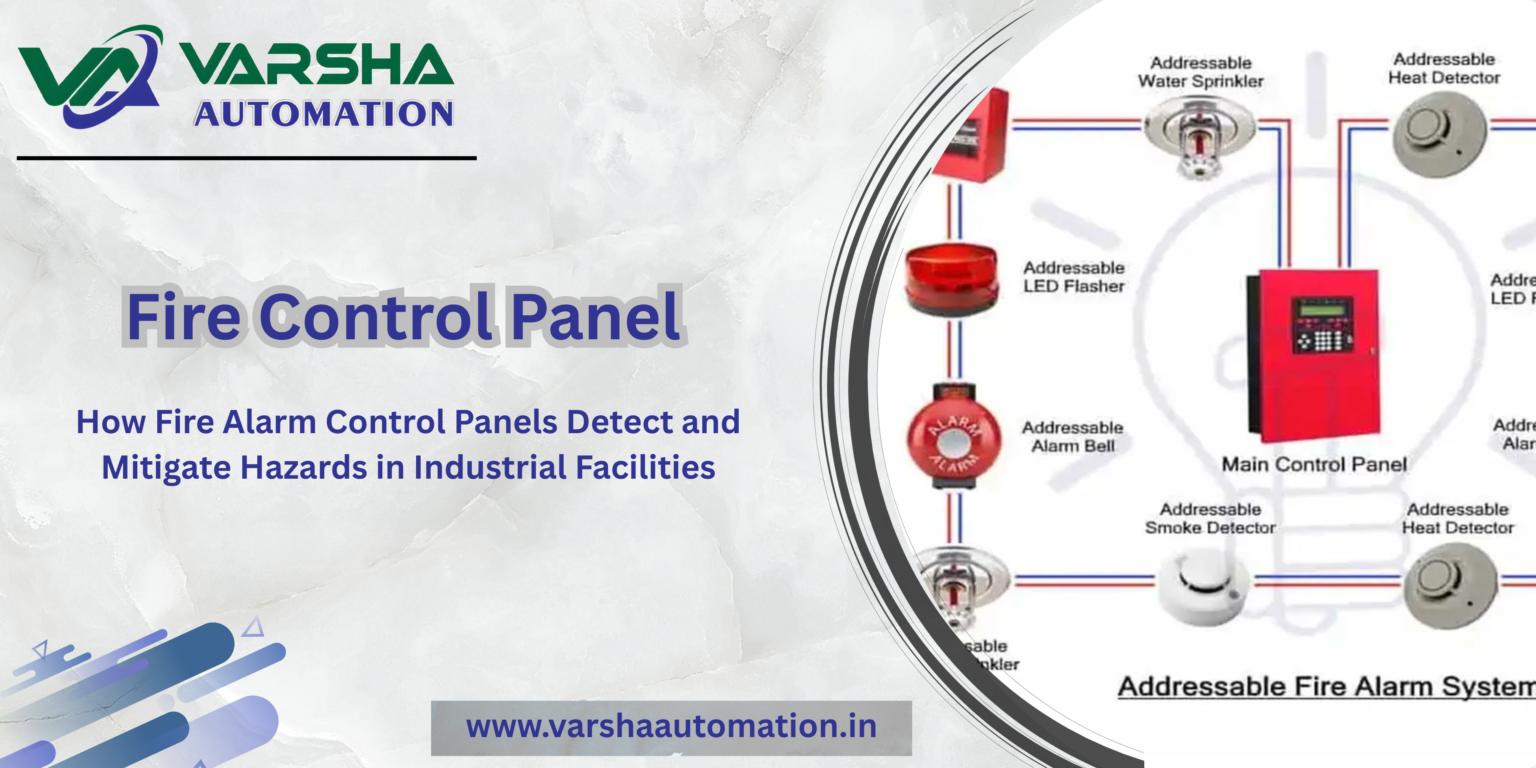
How Fire Alarm Control Panels Detect and Mitigate Hazards in Industrial Facilities
In heavy manufacturing plants, chemical processing facilities, automated warehouses, and continuous production centers, safeguarding human life and physical capital from fire hazards is a paramount engineering priority. Industrial environments present diverse fire risks, ranging from flammable liquid storage and electrical arc flash hazards to combustible dust accumulation and thermal equipment overheating.
Detecting incipient combustion signatures and coordinating rapid life-safety mitigation depends fundamentally on an advanced Fire Control Panel.
A specialized industrial fire alarm control panel integrates intelligent microprocessors, redundant battery power supplies, multi-sensor detection loops, zoned notification appliance circuits, and programmable auxiliary output relays within a heavy-duty, fire-resistant enclosure.
Failing to deploy a robust, certified fire alarm monitoring architecture in heavy industrial plants leads to undetected smoldering fires, rapid structural destruction, toxic gas propagation, catastrophic personnel injuries, and complete facility shutdowns. Understanding the core theoretical mechanisms governing optical smoke sensing, rate-of-rise thermal detection, zoned notification logic, and automated fire suppression release enables plant safety engineers to secure manufacturing facilities. This comprehensive technical guide provides an in-depth theoretical analysis of how fire alarm control panels detect and mitigate hazards in industrial facilities.
Theoretical Architecture of Fire Detection and Mitigation
Industrial fire alarm panels operate via a structured hazard detection and response pipeline that transforms environmental sensor inputs into immediate facility-wide life-safety actions:
+-----------------------------------------------------------------+
|               FIELD HAZARD SENSING & SMOKE DETECTION            |
| (Monitors smoke particulates, thermal gradients, & flame energy)|
+-----------------------------------------------------------------+
                                  |
                                  v
+-----------------------------------------------------------------+
|             INTELLIGENT FIRE PANEL LOGIC PROCESSING             |
| (Evaluates alarm thresholds, filters false alarms, & logs states)|
+-----------------------------------------------------------------+
                                  |
                                  v
+-----------------------------------------------------------------+
|             AUTOMATED MITIGATION & NOTIFICATION ACTION          |
| (Triggers sirens, flashes strobes, & releases suppression gas)  |
+-----------------------------------------------------------------+
1. Multi-Criteria Environmental Hazard Sensing Mechanics
Theoretical Principle: Modern industrial fire panels analyze multiple physical phenomena associated with combustion, including light obscuration caused by smoke aerosols, rapid temperature increases, and electromagnetic infrared or ultraviolet flame radiation signatures.
False Alarm Rejection: Intelligent fire control algorithms combine optical smoke data with thermal rate-of-rise inputs, distinguishing between legitimate combustion hazards and benign industrial nuisances such as steam or manufacturing dust.
2. Zoned Notification and Automated Suppression Interlocking
Theoretical Principle: Upon verifying a confirmed fire hazard, the fire alarm control panel initiates predetermined emergency response protocols. This includes sounding high-decibel audible horns, flashing visual strobe lights, and shutting down forced ventilation air handlers to prevent smoke dispersion.
Suppression Integration: In high-risk areas such as electrical control rooms or solvent storage vaults, the fire control panel sequences automated gas or water-mist suppression release valves after a verified pre-discharge countdown timer expires.
System Integration Across Industrial Control Networks
Fire alarm control panels operate as the highest-priority life-safety node within integrated industrial facility architectures:
Facility Life Safety & Hazard Protection: Primary fire detection, emergency evacuation signaling, and hazard mitigation are managed via a dedicated Fire Control Panel.
Thermal Process & Boiler Safety: Industrial steam boiler combustion safety and fuel shutoff interlocks are coordinated through a specialized Boiler Control Panel.
Supervisory SCADA Telemetry Integration: Fire panel alarm statuses, trouble signals, and supervisory states stream into an intelligent PLC Scada Panel for centralized plant monitoring.
Emergency Power Backup Coordination: Standby generator emergency power supplies and utility transfer logic interface with an automated Synchronize panel.
Electrical Distribution Infrastructure: Primary power feeding fire alarm system battery chargers is routed through a central Power Panel or heavy-duty PCC Panel (Power Control Center), while auxiliary motor equipment is managed via modular MCC Panel and VFD Panel units.
Theoretical Best Practices for Industrial Fire Panel Design
To ensure absolute reliability and compliance during emergency evacuation events, design engineers adhere to three core theoretical guidelines:
Implement Addressable Loop Architecture for Large Plants: Utilize addressable communication loops rather than conventional zones in expansive industrial facilities to pinpoint the exact physical location of a hazard instantly.
Ensure Dual-Redundant Standby Power Capacity: Equip fire alarm control panels with robust secondary battery backup systems sized to maintain 24-hour supervisory monitoring followed by full alarm notification load operation.
Incorporate Hard-Wired HVAC and Elevator Interlocks: Route critical emergency shutdown signals through dedicated hard-wired relay contacts to guarantee that ventilation fans and elevators shut down safely during fire events.
Conclusion
Understanding how fire alarm control panels detect and mitigate hazards in industrial facilities is essential for protecting human life, ensuring regulatory compliance, and securing valuable industrial assets. By deploying multi-criteria hazard sensors, intelligent alarm processing logic, and automated life-safety mitigation systems, industrial processing plants establish an impenetrable safety shield against fire emergencies.
Looking for Custom Fire Control Panels and Advanced Industrial Automation Solutions? Explore our full lineup of critical Fire Control Panel solutions, specialized Boiler Control Panel designs, automated PLC Scada Panel architectures, generator Synchronize panel systems, variable-speed VFD Panel modules, centralized MCC Panel drawers, main Power Panel systems, and heavy-duty PCC Panel assemblies at Varsha Automation. Contact our expert engineering team today.