




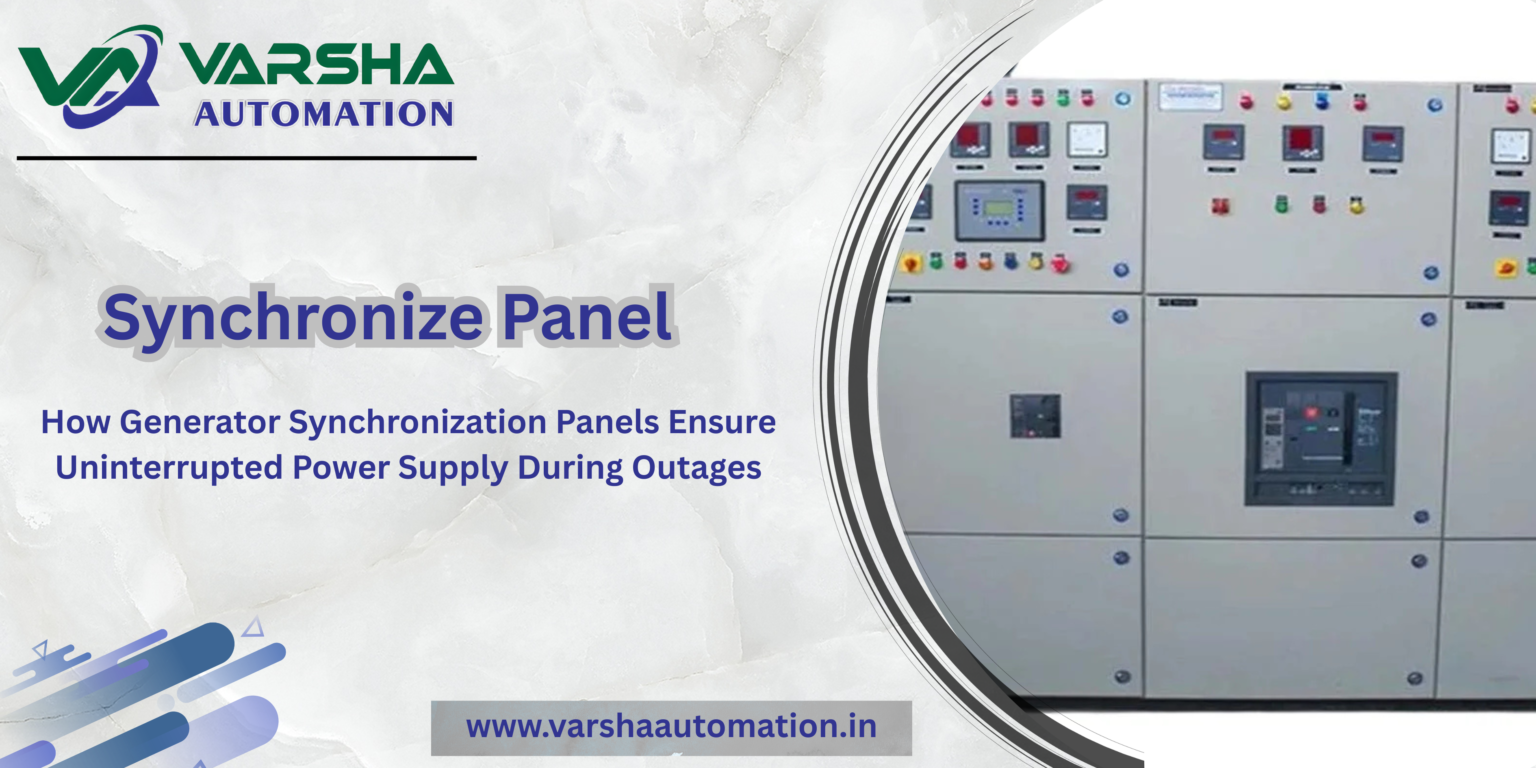
How Generator Synchronization Panels Ensure Uninterrupted Power Supply During Outages
In continuous processing plants, data centers, hospitals, telecommunication networks, and heavy manufacturing facilities, even a momentary interruption in electrical power can cause catastrophic production losses, equipment damage, and data corruption. When the primary utility grid experiences a sudden outage or voltage collapse, industrial facilities require an instantaneous, seamless transition to emergency backup generation without dropping critical connected loads.
Achieving reliable power continuity and seamless generator paralleling depends fundamentally on an advanced Synchronize panel (Generator Synchronization Panel).
A synchronization and AMF panel integrates sophisticated microprocessor-based synchronizing controllers, motorized air circuit breakers, voltage regulators, governors, and phase-monitoring relays within an engineered switchgear enclosure.
Relying on manual generator startup or uncoordinated transfer switches leads to extended facility blackouts, severe electrical transients, reverse power faults, phase opposition damage, and dropped operational loads. Understanding the core theoretical mechanisms behind automated mains failure detection, phase matching, frequency locking, and seamless source transfer allows electrical engineers to guarantee absolute power reliability. This comprehensive technical guide provides an in-depth theoretical analysis of how generator synchronization panels ensure uninterrupted power supply during utility outages.
Theoretical Architecture of Synchronization and AMF Systems
Generator synchronizing panels operate via a structured sequence that detects grid failure, initiates backup generation, matches electrical parameters, and transfers load seamlessly:
+-----------------------------------------------------------------+
|                     PRIMARY UTILITY GRID SENSING                |
|  (Continuously monitors incoming line voltage, frequency, & phase)|
+-----------------------------------------------------------------+
                                  |
                                  v (Grid Failure Detected)
+-----------------------------------------------------------------+
|                  AUTOMATED ENGINE START & AMF LOGIC             |
|  (Triggers standby diesel generators & monitors engine health)  |
+-----------------------------------------------------------------+
                                  |
                                  v
+-----------------------------------------------------------------+
|               SYNCHRONIZING CONTROLLER & BREAKER CLOSING        |
| (Matches voltage, frequency, & phase angle before closing bus)  |
+-----------------------------------------------------------------+
1. Automatic Mains Failure (AMF) and Grid Sensing Mechanics
Theoretical Principle: The synchronizing controller continuously monitors incoming utility line voltages across all three phases. The moment utility voltage drops below preset operational thresholds or experiences a total phase blackout, the AMF logic initiates an automatic start signal to standby generator sets.
Seamless Source Isolation: Simultaneously, the controller opens the main utility incoming circuit breaker, establishing an electrical interlock barrier that prevents dangerous backfeeding into the dead utility grid.
2. Precise Phase Angle, Frequency, and Voltage Matching
Theoretical Principle: Before an incoming generator can be paralleled with an active busbar or closed onto a dead bus, its electrical parameters must match the existing system exactly. The synchronizing controller measures voltage magnitude differences, slip frequency, and relative phase angle continuously.
Zero Transient Transfer: Circuit breaker closing commands are issued only when the phase angle difference approaches zero, preventing severe electromechanical shock to generator alternators, twisting forces on drive shafts, and destructive transient voltage spikes.
System Integration Across Industrial Control Networks
Generator synchronizing and AMF panels interface with every major electrical distribution and process control node across a facility:
Generator Synchronization & Backup: Multi-source emergency power paralleling and seamless utility transfer are managed by a centralized Synchronize panel.
Primary Facility Power Distribution: Main incoming utility power and heavy distribution protection are routed through a central Power Panel or heavy-duty PCC Panel (Power Control Center).
Motor Drive & Sub-Feeder Management: Synchronized backup power feeds downstream MCC Panel motor drawers and variable-speed VFD Panel units.
Supervisory Telemetry & Process Automation: Generator running states, fuel levels, bus frequencies, and transfer statuses are monitored via an intelligent PLC Scada Panel.
Critical Safety and Facility Infrastructure: Life safety and specialized thermal energy equipment are protected by dedicated Boiler Control Panel and Fire Control Panel networks.
Theoretical Best Practices for Synchronizing Panel Engineering
To ensure flawless emergency backup performance and long-term switchgear reliability, automation engineers adhere to three core theoretical guidelines:
Implement Dual Redundant Synchronizing Controllers: Utilize primary and secondary backup synchronizing controllers in critical industrial installations to guarantee fault-tolerant generator paralleling during grid outages.
Inforce Hard-Wired and Software Interlocks: Ensure every synchronizing breaker incorporates both electrical software checks and mechanical Castell key interlocks to completely eliminate the possibility of parallel utility-generator closing.
Conduct Periodic Simulated Blackout Tests: Perform scheduled periodic testing of the AMF and synchronizing sequence under simulated utility failure conditions to verify controller response times and governor actuator calibration.
Conclusion
Understanding how generator synchronization panels ensure uninterrupted power supply during outages is vital for engineering resilient, fail-safe industrial electrical infrastructure. By automating grid failure detection, executing precise phase matching, and managing seamless source transfer, synchronizing panels protect industrial facilities from costly downtime and guarantee continuous operational availability.
Looking for Custom Synchronize Panels and Advanced Industrial Automation Solutions? Explore our full lineup of advanced Synchronize panel systems, main Power Panel architectures, heavy-duty PCC Panel assemblies, centralized MCC Panel setups, specialized VFD Panel modules, automated PLC Scada Panel networks, specialized Boiler Control Panel designs, and critical Fire Control Panel solutions at Varsha Automation. Contact our expert electrical engineering team today.