




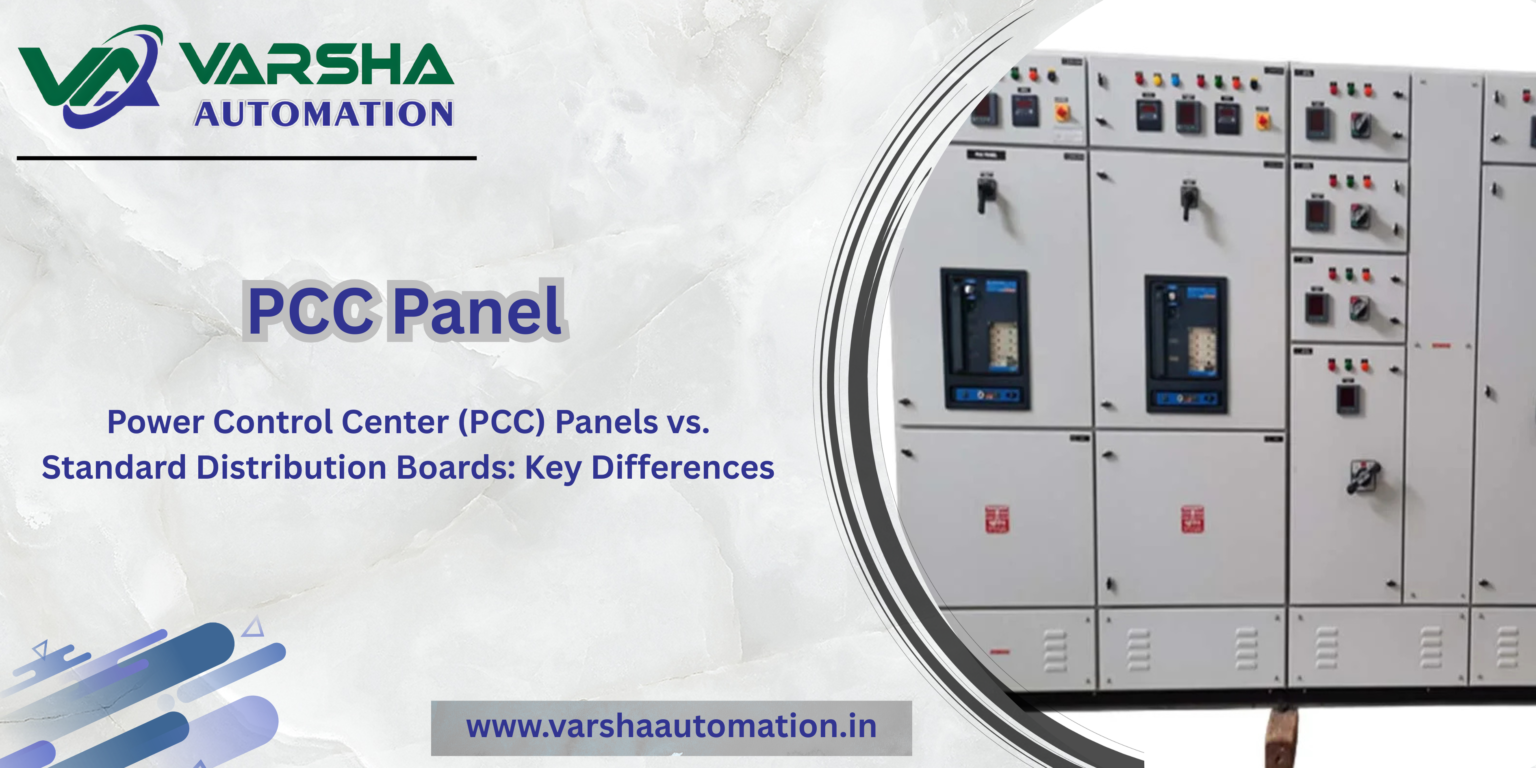
Power Control Center (PCC) Panels vs. Standard Distribution Boards: Key Differences
In modern heavy manufacturing facilities, large industrial complexes, commercial infrastructure, and processing plants, managing the flow of bulk electrical energy requires robust distribution architecture. Raw electrical power received from utility transformers must be received, partitioned, and protected before being distributed safely to secondary operational areas across the facility.
Selecting the appropriate primary electrical switchgear depends fundamentally on a high-capacity PCC Panel (Power Control Center Panel).
A Power Control Center panel serves as the primary low-voltage switchgear assembly, housing heavy air circuit breakers, molded case circuit breakers, high-amperage distribution busbars, and centralized metering instruments.
Deploying standard residential or commercial distribution boards in heavy industrial environments leads to catastrophic busbar melting during short circuits, severe thermal overloads, inadequate fault interrupting capacity, and widespread plant shutdowns. Understanding the core theoretical differences between industrial PCC panels and standard distribution boards—including short-circuit withstand ratings, internal form separation, switchgear coordination, and thermal management—enables electrical engineers to specify correct infrastructure. This comprehensive technical guide provides an in-depth theoretical analysis of the key differences between Power Control Center panels and standard distribution boards.
Theoretical Architecture and Functional Distinctions
Industrial Power Control Centers and standard sub-distribution boards serve fundamentally different operational tiers within an electrical distribution network:
+-----------------------------------------------------------------+
|                   PRIMARY UTILITY TRANSFORMER                   |
|   (Supplies bulk electrical power to the industrial facility)   |
+-----------------------------------------------------------------+
                                  |
                                  v
+-----------------------------------------------------------------+
|               HEAVY-DUTY INDUSTRIAL PCC PANEL                   |
|  (Manages massive fault currents & routes bulk energy feeds)    |
+-----------------------------------------------------------------+
                                  |
                                  v
+-----------------------------------------------------------------+
|              STANDARD SUB-DISTRIBUTION BOARDS                   |
| (Distributes conditioned branch power to local loads/lighting)   |
+-----------------------------------------------------------------+
1. Short-Circuit Withstand and Fault Interrupting Capacity
Theoretical Principle: Industrial Power Control Center assemblies are engineered to handle massive prospective short-circuit currents directly downstream from utility transformers. PCC switchgear incorporates heavy air circuit breakers and robust busbar bracing designed to withstand severe electrodynamic and thermal forces during fault events.
Standard Distribution Board Limits: Standard distribution boards utilize miniature or molded case circuit breakers with lower interrupting ratings, making them suitable only for branch circuits where prospective fault currents are substantially attenuated.
2. Internal Compartmentation and Safety Form Separation
Theoretical Principle: PCC panels utilize strict internal form separation (such as Form 3 or Form 4 design) to isolate incoming busbar chambers, breaker compartments, and cable termination alleys. This ensures that an internal arc fault remains contained within a single module.
Standard Distribution Board Limits: Standard distribution boards typically feature basic internal separation, exposing internal bus structures upon cover removal and increasing arc flash exposure risks for maintenance personnel.
System Integration Across Industrial Control Networks
Power Control Center panels act as the primary heavy-duty distribution node within integrated industrial facility architectures:
Central Bulk Power Receiving: Primary facility power is received and managed through a heavy-duty PCC Panel or main Power Panel.
Motor & Drive System Distribution: High-capacity feeders route power directly to localized MCC Panel drawers and variable-speed VFD Panel units.
Supervisory Process Automation: Energy telemetry, breaker trip statuses, and power quality data interface with an intelligent PLC Scada Panel.
Emergency Backup & Facility Safety: Alternate generator feeds are coordinated via an automated Synchronize panel, while facility safety is supported by dedicated Boiler Control Panel and Fire Control Panel networks.
Theoretical Best Practices for Switchgear Specification
To ensure maximum electrical safety and long-term reliability across industrial power networks, design engineers adhere to three core theoretical guidelines:
Match Short-Circuit Ratings to Transformer Capacity: Always calculate prospective short-circuit fault levels at the transformer secondary terminals to ensure selected PCC switchgear possesses adequate kA withstand capability.
Specify Form 4 Compartmentation for Critical Processes: Implement maximum internal form separation in continuous-process industries to prevent localized electrical faults from causing facility-wide power outages.
Incorporate Comprehensive Digital Metering: Equip PCC main incoming and feeder sections with digital power meters and protective relay communication modules for real-time electrical parameter monitoring.
Conclusion
Understanding the key differences between Power Control Center panels and standard distribution boards is essential for engineering safe, reliable, and compliant industrial electrical networks. By deploying heavy-duty switchgear with high short-circuit withstand ratings and strict internal compartmentation, industrial facilities protect vital equipment, ensure personnel safety, and maintain continuous operational uptime.
Looking for Custom PCC Panels and Advanced Industrial Automation Solutions? Explore our full lineup of advanced PCC Panel architectures, main Power Panel systems, centralized MCC Panel drawers, specialized VFD Panel modules, automated PLC Scada Panel networks, generator Synchronize panel systems, specialized Boiler Control Panel setups, and critical Fire Control Panel solutions at Varsha Automation. Contact our expert electrical engineering team today.